The Coolest Facts About Tarantulas That Will Blow Your Mind
When you think of spiders, the image that comes to mind is probably a small, eight-legged creature scurrying across your floor. But what if I told you there’s a spider species that can grow as large as a dinner plate? Meet the tarantula – a fascinating arachnid with an array of amazing traits that will leave you in awe. From their impressive size variations to their unique defensive mechanisms, tarantulas are far from your typical backyard creepy-crawly. Let’s dive into the world of tarantulas and uncover some of the coolest facts about these incredible creatures.
Meet the Tarantula: An Introduction
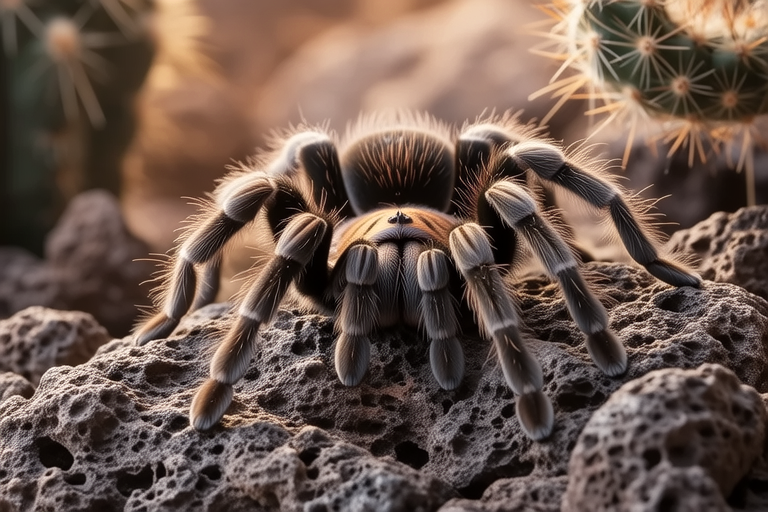
Tarantulas belong to the family Theraphosidae and are among the largest spiders in the world. These hairy giants can be found on every continent except Antarctica, thriving in diverse habitats ranging from deserts to rainforests. While many people associate tarantulas with fear and disgust, these creatures are actually quite docile and pose little threat to humans. In fact, most tarantulas prefer to avoid confrontation and will only attack when provoked or cornered.
Their name, “tarantula,” comes from the Italian city of Taranto, where people believed they were affected by the bite of the wolf spider (Lycosa tarantula). The belief was that the only cure for this bite was to dance vigorously, leading to the creation of the tarantella dance. However, modern research has shown that the venom of the wolf spider is not potent enough to cause serious harm to humans, and the supposed “cure” was likely a cultural myth.
Size Matters: From Tiny to Massive
One of the most striking features of tarantulas is their size. Tarantulas can vary greatly in size depending on the species. The smallest tarantulas, such as the Bolivian Ramirezi, have leg spans of just 2 inches (5 cm), making them relatively small compared to other spiders. On the other hand, the Goliath birdeater (Pterinopelma maxima) is one of the largest spiders in the world, with a leg span of up to 12 inches (30 cm) and a weight of over 6 ounces (170 grams).
These size differences are not just a matter of appearance; they also affect the tarantula’s behavior and survival strategies. Larger tarantulas, like the Goliath birdeater, have the advantage of being able to consume larger prey, including small birds and rodents. Their size also makes them less vulnerable to predators, as they are simply too big for most animals to handle.
Defensive Mechanisms: More Than Just Bites
While tarantulas may look intimidating, their first line of defense is not always their fangs. Instead, many tarantulas rely on their impressive hairs to protect themselves from potential threats. Some species have urticating hairs, which are barbed and irritating to the touch. When threatened, these tarantulas will flick these hairs at their attacker, causing irritation and discomfort. This defense mechanism is particularly effective against mammals, whose skin and eyes are sensitive to the hairs.
In addition to their hairs, tarantulas also possess venomous fangs. However, their venom is generally not dangerous to humans. Most tarantula bites are no worse than a bee sting, and in some cases, the venom serves more as a deterrent than a weapon. For example, the Chilean rose tarantula (Grammostola rosea) uses its venom to subdue its prey, injecting it into insects and other small animals to immobilize them before consumption.
Diet Diversity: From Insects to Small Mammals
Tarantulas are carnivorous and have a diverse diet that includes insects, small lizards, frogs, and even small mammals. They are opportunistic hunters, using their keen senses to locate and capture prey. Tarantulas often wait in ambush, hiding in burrows or under rocks, and pouncing on unsuspecting victims. Once caught, they inject venom into their prey to paralyze it before consuming it.
Some tarantulas, like the Goliath birdeater, have been observed preying on small birds and mammals. Despite their reputation as bird eaters, these spiders rarely target live birds. Instead, they tend to scavenge on dead or injured birds. This behavior is thought to be an adaptation to maximize their food intake without expending unnecessary energy hunting.
Habitat Diversity: Thriving in Various Environments
Tarantulas are highly adaptable and can be found in a wide range of habitats, from deserts to rainforests. Desert-dwelling tarantulas, such as the Mexican red-knee tarantula (Buthus peryphonus), are well-adapted to arid environments, where they dig burrows to escape the heat and conserve moisture. These burrows are often lined with silk and serve as both homes and traps for unsuspecting prey.
In contrast, rainforest tarantulas, like the Brazilian salmon pink birdeater (Lasiodora parahybana), thrive in humid, tropical environments. These tarantulas are known for their vibrant colors and large size, with males often exhibiting brighter hues during mating season. Rainforest tarantulas are skilled climbers and can be found high up in trees, where they build webs to catch flying insects.
Interesting Behaviors: Courtship and Parental Care
One of the most fascinating aspects of tarantulas is their complex courtship rituals. Male tarantulas often perform elaborate dances to attract females, waving their front legs and tapping the ground to create vibrations. These vibrations help the female locate the male, and if she is receptive, mating occurs. After mating, the male typically retreats quickly, as the female may attempt to eat him if given the opportunity.
Female tarantulas exhibit remarkable parental care. After laying her eggs, a female tarantula will guard her egg sac for several weeks, ensuring that the eggs remain safe from predators. Once the spiderlings hatch, the mother continues to care for them, providing protection and guidance until they are old enough to fend for themselves. This level of maternal care is unusual among spiders and highlights the complexity of tarantula behavior.
Conclusion: Awe-Inspiring Creatures
From their impressive size variations to their unique defensive mechanisms and fascinating behaviors, tarantulas are truly awe-inspiring creatures. Whether you’re marveling at the Goliath birdeater or admiring the delicate courtship rituals of desert-dwelling tarantulas, these spiders offer a wealth of intrigue and wonder. Despite their fearsome reputation, tarantulas play a crucial role in their ecosystems, helping to control insect populations and serving as prey for larger animals. So next time you encounter a tarantula, take a moment to appreciate the complexity and beauty of these incredible creatures. You might just find yourself captivated by their charm and grace.
