Quick & Easy Recipes
How To Cook Perfect Rice Every Single Time Without Errors
Grain by Grain, Flawlessly Yours
## Introduction: Unlocking the Mystery of Flawless Rice
There is perhaps nothing more frustrating in the culinary world than a failed meal where the staple ingredient falls short. You know exactly what we are talking about. It could be sticky clumps of porridge-like mess instead of distinct, fluffy grains, or worse, a hard, crunchy shell forming on top while the bottom burns to a crisp. Rice is the foundation of countless meals across cultures, yet mastering it remains a mystery for many home cooks. Why does the same bag of rice produce varying results depending on the day? Is it the brand? The pot? Or is it simply a lack of technique?
The truth is that cooking perfect rice is not about luck; it is about understanding physics and chemistry. Consistency comes from controlling variables: the type of grain, the amount of water, the duration of heat, and even the resting time before serving. In this comprehensive guide, we are going to unlock the mystery of flawless rice. We will move beyond vague instructions like "cook until done" and provide precise formulas and techniques that you can replicate every single time. Whether you prefer a rice cooker or the traditional stovetop method, this guide will set expectations for a reliable, error-free experience. By the end of this article, you will never again worry about undercooked or mushy rice. Let's transform your kitchen into a space of culinary confidence.
## Foundation: Choosing the Right Rice and Pot
Before we even think about measuring water or turning on the stove, we must establish the foundation. Cooking rice effectively begins long before the cooking process starts, specifically during the selection phase. Not all rice is created equal, and using the wrong vessel can undermine even the best technique.
### Understanding Varietal Nuances
Different varieties of rice possess distinct chemical compositions, primarily regarding their amylose and amylopectin content. Amylopectin makes rice sticky, while amylose keeps it separate and fluffy.
- **Long-Grain Rice (Basmati and Jasmine):** These grains are high in amylose. When cooked correctly, they remain separate, light, and fluffy. They are ideal for curries, biryanis, and salads. Overcooking them will turn them into mush.
- **Medium-Grain Rice:** Commonly found in Asian cuisines, this rice has a moderate level of stickiness. It offers a slightly chewy texture and holds together better than long-grain, making it suitable for sushi (when seasoned) or side dishes.
- **Short-Grain Rice (Arborio and Sushi Rice):** These are high in amylopectin, creating a naturally creamy and sticky texture. Short-grain rice is excellent for risottos or pudding but requires careful water management to avoid becoming pasty.
- **Brown Rice:** Unlike white rice, brown rice retains the bran layer. This layer acts as a barrier to water absorption, meaning brown rice requires significantly more water and longer cooking times than its white counterparts.
Knowing your rice variety is the first step toward success. Using Basmati rice intended for biryani in a risotto recipe will yield disastrous results because the texture requirements are fundamentally different.
### Selecting the Appropriate Cookware
Equally critical is the pot you choose. Even heat distribution is the key to uniform cooking. A thin, lightweight pot will develop hot spots, causing the rice underneath to burn while the rest remains raw.
- **Heavy-Bottomed Saucepan:** For stovetop cooking, a heavy-bottomed stainless steel or enameled cast iron pot is ideal. The thickness retains heat well and prevents scorching. A tight-fitting lid is non-negotiable to trap the necessary steam.
- **Rice Cookers:** Modern fuzzy logic rice cookers automatically adjust temperature and time based on moisture sensors. For beginners, these are arguably the safest bet for consistency. High-end models often come with settings specifically labeled "White," "Brown," or "Sushi," which optimize the heating curve for that specific grain.
- **Avoid Non-Stick Unless Necessary:** While convenient, cheap non-stick pans can degrade over time and scratch. A good quality stainless steel pot is durable and easy to clean, provided you follow the cooking methods outlined here.
By pairing the correct rice variety with the right cookware, you eliminate the variables of thermal inconsistency, setting the stage for perfection.
## Preparation: Washing, Soaking, and Measuring
Once you have the rice and pot, preparation is where many cooks cut corners, thinking it will save time. In reality, rushing preparation is the primary source of inconsistent textures. Proper hygiene and hydration are essential steps.
### The Critical Importance of Rinsing
Raw rice often carries excess surface starch known as dust or powdery coating left over from milling. If left unwashed, this starch dissolves quickly into the cooking water, creating a gel-like glue that binds the grains together.
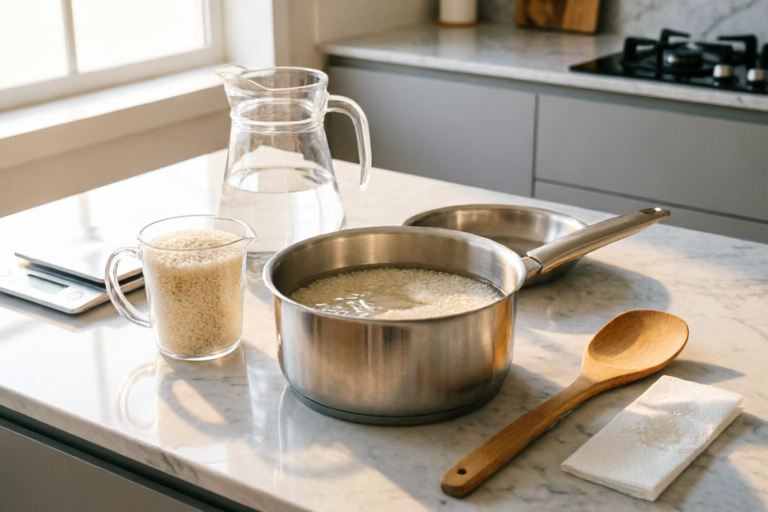
- **How to Rinse:** Place your measured rice in a fine-mesh sieve or bowl. Cover with cold water and swish gently with your fingers. Drain immediately. Repeat this process three to five times until the water runs relatively clear. For sticky rice (like sushi), you may only wash it twice, leaving some surface starch for adhesion. For fluffy pilafs or basmati, wash until the water is completely clear.
- **Why It Matters:** Removing this surface starch ensures that the grains slide apart rather than sticking. It prevents gummy puddles and allows the rice to absorb fresh water evenly.
### Soaking for Texture Improvement
While skipping this step won't ruin rice entirely, soaking unlocks superior texture. Soaking hydrates the core of the grain before heat is applied, ensuring the center cooks at the same rate as the outer edge.
- **Ideal Soaking Time:** Generally, 30 minutes is sufficient for white rice. Basmati benefits greatly from a 30-minute soak, which elongates the grain and reduces breakage. Brown rice requires a longer soak, ideally 30 to 60 minutes, to soften the tough bran layer. Long soaks (over 2 hours) can lead to fermentation, especially in warm climates, so keep soaking times controlled.
- **Impact:** Soaked rice takes less time to boil, resulting in better nutrient retention and a more consistent bite. It prevents the phenomenon where the outside is mushy but the inside remains chalky.
### Precision Measuring Techniques
Finally, accurate measurement is the bedrock of the water ratio. Most people scoop directly from the bag using a standard American cup, but this is prone to variation.
- **Use the Cup Provided:** Most rice packages include a standardized measuring cup. These are typically smaller than a US cup (approx. 180ml instead of 240ml). Using the bag's cup for both rice and water ensures your ratio remains accurate relative to the manufacturer's testing.
- **Standard Metric:** If you do not have the bag's cup, use a standard measuring cup (240ml) and measure both rice and water precisely. Level off the top of the rice with a straight edge to remove air pockets. Loose scooping adds extra air, skewing the weight and subsequently the water ratio.
Neglecting precision here guarantees failure downstream. Treat measuring as a science experiment where accuracy dictates success.
## Execution: Water-to-Rice Ratios and Heat Control
This is the heart of the process. Having prepped perfectly, execution relies on the delicate balance between water volume and thermal energy. Different cooking methods require different calculations.
### Precise Measurement Formulas
Water ratios vary by rice type and equipment, but here are the gold standards:
1. **White Rice (Stovetop):** The classic ratio is 1:1.5 (one cup of rice to 1.5 cups of water). For highly polished white rice, 1:1.25 might suffice as it absorbs less water. For older rice, increase water slightly.
2. **Basmati Rice:** Due to its tendency to expand, use 1:1.5. If soaking, reduce water slightly to 1:1.25 as the grain already holds hydration.
3. **Jasmine Rice:** Known for being fragrant and soft, this usually prefers 1:1.25. It releases more water during cooking compared to other whites.
4. **Brown Rice:** Requires significantly more water. A safe ratio is 1:2.25. Some prefer up to 1:2.5 for softer textures, but watch for burning.
5. **Rice Cooker Method:** Manufacturers test their own machines. Usually, fill the pot with rice, rinse it, then drain. Add water up to the line marked for that number of cups on the inner pot. Do not eyeball this; trust the lines.
**The Fingers Test (Traditional):** In some Asian households, the rice is placed in the pot, leveled, and water is added to touch the first knuckle of the index finger. While culturally significant, this is subjective and varies by finger size. For true consistency, always use volume measurements.
### Managing Temperature Across Methods
Heat control is what separates good rice from great rice. Rice needs to simmer, not boil violently, and it needs steam.
#### The Stovetop Simmer Method
1. **Bring to Boil:** Combine rinsed rice and measured water in a heavy-bottomed pot. Bring to a rolling boil over high heat uncovered. This kills bacteria and activates the gelatinization process.
2. **Immediate Reduction:** The moment it boils, cover tightly with the lid, turn the heat down to the lowest possible setting (simmer). This is crucial. High heat after boiling will evaporate water too fast.
3. **The Timer:** Set a timer for exactly 18 minutes for white rice. **Do not lift the lid.** Every time you lift the lid, steam escapes, and temperature drops, causing uneven cooking. If using brown rice, set the timer for 40-45 minutes.
#### The Rice Cooker Method
1. **Add Ingredients:** Place rice and water in the inner pot. Stir once to ensure grains are submerged.
2. **Press Start:** Close the lid and press the appropriate setting. Modern cookers handle the reduction automatically.
3. **Don't Interrupt:** Resist the urge to check. The cooker uses sensors to detect moisture levels. Interfering disrupts the algorithm.
### Troubleshooting Common Heat Issues
- **Water Evaporated Too Fast:** If you notice low water before the timer ends, add a tablespoon of hot water quickly. Do not open frequently.
- **Burnt Bottom:** This happens if heat is too high. Reduce burner setting immediately to minimum. If the bottom is scorched, transfer the top portion to a clean bowl to avoid tasting the burnt bits.
- **Undercooked Center:** Add another quarter cup of hot water, cover, and cook for another 5 minutes on low heat.
## Conclusion: Resting, Fluffing, and Final Tips
You have cooked the rice, managed the heat, and timed the process. You think you are done. Technically, yes, you cooked the rice. Practically, you are not finished until you perform the finishing steps. Skipping these final stages ruins the effort you just invested.
### The Importance of the Resting Phase
After the cooking timer goes off, resist removing the rice immediately. Turn off the heat, but leave the lid on. Let the rice sit for at least 10 minutes.
- **Steam Redistribution:** During cooking, moisture collects at the bottom of the pot. Resting allows this residual steam to circulate upward, evening out the moisture content throughout the entire dish. This prevents soggy bottoms and dry tops.
- **Texture Setting:** The grains continue to firm up slightly as they cool, locking in the texture. Immediate serving often leads to mush.
### Fluffing Techniques
After the 10-minute rest, remove the lid. Take a fork or a rice paddle and gently fluff the rice from the bottom up.
- **Purpose of Fluffing:** Gently separating the grains releases trapped steam. Do not mash the rice; use a cutting motion with the fork. This aerates the rice and makes it light.
- **Serving:** Serve immediately while warm. Cold rice changes starch composition (retrogradation), making it harder and less flavorful.
### Key Takeaways for Consistent Success
To summarize, achieving perfect rice without errors requires discipline in four areas:
1. **Selection:** Match your pot and rice variety to the dish you intend to cook.
2. **Preparation:** Wash to remove excess starch and soak for hydration.
3. **Ratio:** Measure water and rice accurately according to specific grain rules (e.g., 1:1.5 for white).
4. **Patience:** Trust the resting phase. Never peek during the simmer.
Cooking rice seems simple, but it is a delicate dance of ingredients and timing. By following these structured guidelines, you elevate rice from a mere filler to a highlight of your meal. Practice these methods, adjust slightly based on your specific water hardness and altitude, and soon, you will find yourself able to produce perfect grains effortlessly. Your guests will be impressed, and your family dinner will never be compromised by a kitchen disaster again. Remember, every grain counts. Happy cooking!
*Pro Tip:* Store leftover rice in an airtight container in the refrigerator for up to 4 days. Reheat in a microwave with a splash of water to restore moisture. Freezing cooked rice is also an excellent option for meal prep, extending shelf life up to a month. Never leave cooked rice at room temperature for more than two hours to prevent bacterial growth.
Comments

SimpleEats
Tried this! Perfect consistency. Thanks!
👍 29👎 0

HungryHub
Quick one - how much water for the rice cooker method?
👍 24👎 0

JasmineLover
Pro tip: rinse until the water runs clear-ish, not bone white. Learned that the hard way 😂
👍 22👎 0

DadCooks
Used to burn mine every time. The 'resting' instruction saved me from dry rice tonight.
👍 22👎 0
SpiceLife
Added a pinch of salt and turmeric, turned out amazing for curry night.
👍 8👎 0

RiceNoob
Does this work with brown rice too or just white?
👍 4👎 0
SarahBakes
Finally got the fluffiness right! The rinsing part is key 🙌
👍 26👎 0