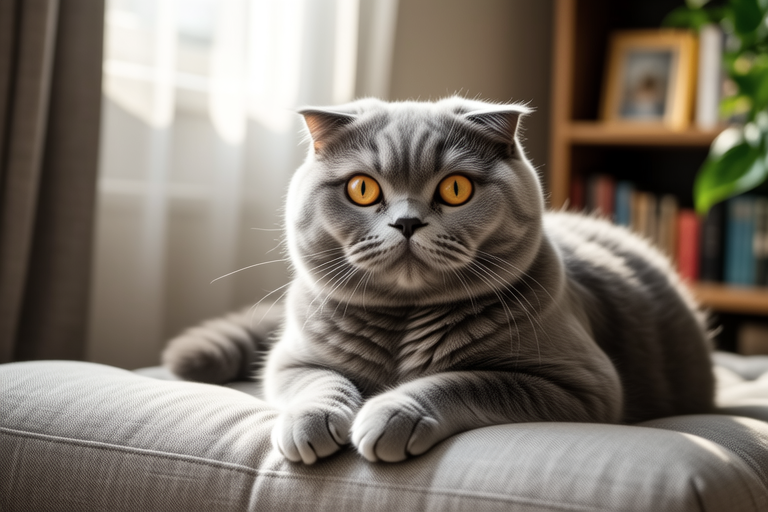
Life with a Scottish Fold: A Heartwarming Companion Experience
Welcome to the enchanting world of Scottish Folds, where each day is filled with warmth, companionship, and delightful surprises. These unique felines have captured the hearts of many with their distinctively folded ears, gentle demeanor, and endearing personalities. This article aims to guide you through the joys and responsibilities of owning a Scottish Fold, offering valuable insights into their care, health, and training needs.
The Distinctive Folded Ears
The most striking feature of the Scottish Fold is its folded ears, which give it a look reminiscent of an owl. This trait is due to a genetic mutation that affects the cartilage of the ear, causing it to fold forward and downward. While not all kittens born to Scottish Fold parents will inherit this trait, those who do often have a charming, almost whimsical appearance that never fails to elicit smiles and coos from admirers.
The folded ears, however, come with some challenges. The breed is prone to ear infections and hearing issues, so regular cleaning and veterinary check-ups are essential. Despite these concerns, the allure of their unique look remains irresistible to many.
Gentle Temperament
Scottish Folds are known for their calm and gentle nature, making them excellent companions for families with children and other pets. Their affectionate and docile demeanor means they are generally easy to handle and enjoy being around people. They are often described as having a laid-back personality, content to curl up beside you on the couch or follow you around the house.
One of my favorite anecdotes involves my friend’s Scottish Fold, named Luna. She had a habit of following her owner everywhere, even into the bathroom. Luna would sit quietly by the door, patiently waiting until her owner was ready to come out. This gentle and trusting behavior exemplifies the bond that can develop between a Scottish Fold and its human family.
Suitability for Families
Scottish Folds are well-suited for families due to their friendly and adaptable nature. They thrive in environments where they receive attention and affection but also appreciate quiet moments. They are generally tolerant of children and other animals, making them ideal for households with multiple pets or young children.
My neighbor, Sarah, has a Scottish Fold named Oliver who has become a cherished member of her large family. Oliver enjoys playing with her children and has even formed a close friendship with her dog, Max. His gentle nature ensures that he is always a welcome presence in the home.
Care Requirements
While Scottish Folds are relatively low-maintenance pets, they do require proper care to ensure their health and happiness. Regular grooming is essential to keep their coat free from mats and tangles. Brushing them at least once a week can help maintain their fur’s health and shine.
Feeding them a balanced diet is crucial. High-quality cat food that meets their nutritional needs should be provided. Avoid overfeeding, as obesity can lead to various health problems. Fresh water should always be available.
Veterinary care is another important aspect of their well-being. Regular check-ups can help catch any health issues early and ensure your Scottish Fold stays healthy. Vaccinations and parasite control are also necessary.
Health Considerations
Despite their charming appearance, Scottish Folds face certain health challenges. The folded ear condition can lead to ear infections and hearing problems. Regular cleaning and monitoring of the ears can help prevent these issues.
Beyond ear health, Scottish Folds are also susceptible to osteochondrodysplasia, a condition that affects the joints and bones. This can lead to arthritis and mobility issues. Providing a soft, comfortable bed and ensuring they maintain a healthy weight can help alleviate discomfort.
It’s important to note that not all Scottish Folds will develop these conditions, but being aware of the risks and taking preventative measures can significantly improve their quality of life.
Training Tips
Training a Scottish Fold can be a rewarding experience. While they are generally independent and may not respond to commands like dogs, they can still learn basic behaviors such as using a litter box and scratching post. Positive reinforcement techniques, such as treats and praise, work best.
My own Scottish Fold, Charlie, learned to use his scratching post by placing it near his favorite napping spot. I would gently guide him towards it whenever he scratched furniture and offer him treats when he used the post. Consistency and patience were key in this process.
Personal Stories and Anecdotes
The bond between a Scottish Fold and its owner is often profound. Many owners share stories of how their cat has brought joy and comfort into their lives. For instance, one owner, Emily, shared that her Scottish Fold, Bella, helped her through a difficult time after losing a loved one. Bella’s presence and affection provided solace during moments of grief.
Another story comes from John, whose Scottish Fold, Finn, developed a unique habit of fetching toys. John noticed that whenever he threw a toy, Finn would run to get it and bring it back. This playful interaction became a cherished part of their daily routine.
The Joy and Companionship
Living with a Scottish Fold is a heartwarming experience that brings immense joy and companionship. Their unique appearance, gentle temperament, and loving nature make them wonderful additions to any family. Whether lounging on the couch or engaging in playful activities, Scottish Folds are sure to bring smiles and laughter to your home.
In conclusion, if you’re considering adding a Scottish Fold to your family, be prepared for a lifetime of love, laughter, and companionship. With proper care and attention, these special cats can bring immeasurable happiness to your life. Embrace the journey of sharing your home with a Scottish Fold, and you’ll find yourself enriched by their presence.
