Parrot Fish: The Ocean’s Unsung Heroes Who Eat Coral and Save Reefs
Imagine a creature that eats coral—yes, the very material that forms the backbone of coral reefs—and turns it into sand. Not only does it survive on this diet, but it also plays a crucial role in keeping entire marine ecosystems alive. Meet the parrot fish: a vibrant, brilliantly colored marvel of the ocean whose unassuming feeding habits are nothing short of revolutionary.
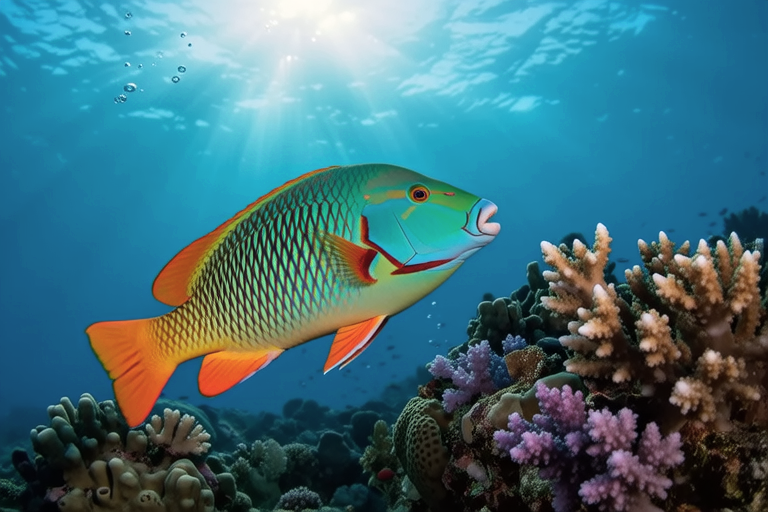
For decades, scientists and divers alike have marveled at the dazzling hues of parrot fish—shades of electric blue, neon green, and fiery orange—but few realized just how vital these colorful fish truly are. They aren’t just ornamental; they are essential engineers of reef health, working tirelessly beneath the waves to maintain balance in one of Earth’s most fragile and beautiful environments.
The Beak That Builds Reefs
At first glance, the parrot fish seems like an odd choice for a reef guardian. After all, coral is hard, rocky, and seemingly impenetrable. But nature has equipped the parrot fish with a remarkable tool: a beak-like mouth made from fused teeth. This powerful, parrot-shaped jaw allows them to scrape and bite off chunks of live coral with astonishing efficiency.
As they feed, parrot fish use their beaks to gnaw away at coral skeletons, consuming the soft tissue and algae that grow within. What remains—the crushed coral fragments—passes through their digestive system. By the time it exits as waste, the once-hard coral has been ground down into fine, white sand. A single parrot fish can produce up to 800 pounds (about 360 kilograms) of sand each year. Over time, this adds up to massive amounts of new sediment, helping build beaches and even entire islands.
But their impact goes far beyond sand production. By eating algae-covered coral, parrot fish prevent algal overgrowth—a major threat to reef survival. When algae dominate, they smother coral polyps, block sunlight, and inhibit new coral growth. Parrot fish act like underwater lawn mowers, keeping algae in check and giving corals space to thrive.
Reef Architects and Ecosystem Stewards
Coral reefs are among the most biodiverse ecosystems on the planet, supporting millions of species. Yet they face relentless threats—from climate change and pollution to overfishing and coastal development. In this battle for survival, parrot fish stand out as key allies.
Research shows that healthy populations of parrot fish correlate strongly with resilient, thriving reefs. Where parrot fish numbers decline, algae often take over, leading to what scientists call “algal dominance.” This shift can trigger a cascade of ecological collapse: coral dies off, fish populations drop, and the reef loses its ability to recover from storms or bleaching events.
Conversely, where parrot fish remain abundant, reefs show greater capacity for recovery. Their grazing creates open spaces on the reef surface—ideal spots for new coral larvae to settle and grow. In essence, parrot fish don’t just clean up the reef; they prepare the stage for its rebirth.
Scientists have observed that some reef systems without parrot fish struggle to bounce back after disturbances. In contrast, reefs with robust parrot fish populations demonstrate faster regeneration rates. This makes them not just consumers of coral, but active participants in the creation and maintenance of reef structure.
Feeding Behavior: A Symphony of Survival
Parrot fish don’t just graze randomly—they follow complex patterns influenced by food availability, competition, and environmental conditions. Many species are diurnal, meaning they feed during daylight hours. They often travel in groups, moving across reef flats and slopes, systematically clearing patches of coral and algae.
Interestingly, parrot fish exhibit a behavior known as “nocturnal sleeping.” At night, many species secrete a mucus cocoon around themselves, protecting them from predators while they rest. This unique adaptation highlights how deeply evolved they are—both physically and behaviorally—for life on the reef.
Some species, like the stoplight parrotfish found in the Caribbean, can grow over three feet long and live for more than 20 years. Their slow growth and late maturity make them particularly vulnerable to overfishing. Once removed from the ecosystem, it takes decades for their populations to rebound—far longer than most other reef fish.
The Hidden Crisis: Overfishing and Habitat Loss
Despite their critical role, parrot fish are increasingly threatened. In many parts of the world, they are targeted for food—especially in regions where they are considered a delicacy. In places like the Caribbean, Southeast Asia, and parts of the Pacific, parrot fish are caught using nets, traps, and spear guns, often without regulation.
Overfishing disrupts the delicate balance of reef ecosystems. When too many parrot fish are removed, algae begin to spread unchecked. Without their natural grazers, coral becomes overwhelmed. Studies have shown that reefs with depleted parrot fish populations experience higher rates of coral loss and slower recovery times—even when water quality improves.
Compounding the problem is habitat destruction. Coastal development, pollution, and destructive fishing practices like dynamite or cyanide fishing damage reef structures that parrot fish depend on. Without safe habitats to live and feed in, their populations continue to dwindle.
Climate change adds another layer of danger. Rising sea temperatures cause coral bleaching—when corals expel the symbiotic algae living in their tissues, turning white and often dying. While parrot fish can’t reverse bleaching, they can help reefs recover by clearing space for new coral growth. But if both coral and parrot fish are under stress simultaneously, recovery becomes nearly impossible.
A Call to Action: Protecting the Reef’s Guardians
The story of the parrot fish is not just about a single species—it’s a story about balance, resilience, and the interconnectedness of life in the ocean. These fish are not pests or nuisances; they are essential stewards of one of Earth’s most valuable ecosystems.
So what can be done? Conservation efforts must start with recognizing the parrot fish’s true value. Governments and marine managers should establish no-take zones and seasonal fishing bans specifically designed to protect parrot fish populations. Some countries, like Belize and Palau, have already taken bold steps by banning the commercial harvest of parrot fish altogether—an example others should follow.
Education is equally important. Divers, tourists, and local communities need to understand that seeing a parrot fish isn’t just a moment of beauty—it’s witnessing a vital part of the reef’s repair crew at work. When people appreciate their role, they’re more likely to support protective measures.
Sustainable fishing practices should be promoted. Instead of targeting parrot fish, fishermen could focus on more resilient species or adopt gear that minimizes bycatch and habitat damage. Eco-certification programs for seafood could include protections for key reef species like parrot fish, guiding consumers toward responsible choices.
Finally, restoring damaged reefs should include strategies that support parrot fish recovery. This means planting coral, reducing pollution, and creating marine protected areas where fish can thrive without human interference. Healthy reefs don’t just benefit parrot fish—they benefit us all.
Why We Should Care
Reefs are not just underwater gardens—they are lifelines. They protect coastlines from storms, provide food and income for millions of people, and support global biodiversity. The parrot fish, though small and often overlooked, plays a disproportionate role in keeping these systems functioning.
Consider this: every grain of beach sand you walk on may have once been part of a coral reef, broken down by a parrot fish. The same fish that helps build your vacation destination also protects the homes of countless marine creatures. It’s a reminder that even the smallest actions—like eating less reef fish or supporting conservation—can ripple outward, shaping the future of entire ecosystems.
We often think of heroes as those who wear capes or lead armies. But in the ocean, true heroes wear scales, swim silently, and eat coral without fanfare. The parrot fish is one such hero—one whose quiet work sustains reefs, builds beaches, and offers hope for a healthier planet.
Final Thoughts
Next time you see a parrot fish darting through a reef—its bright colors flashing in the sunlight—pause and consider what it’s really doing. It’s not just surviving; it’s saving the reef. It’s grinding coral into sand, clearing algae, and making room for new life. It’s a quiet force of nature, shaping the ocean one bite at a time.
But it needs our help. As climate change accelerates and oceans warm, the pressure on reefs grows. Now is the moment to act—not for the sake of a single fish, but for the entire web of life it supports.
Let’s protect the parrot fish. Let’s protect the reefs. And in doing so, let’s protect the future of our planet’s oceans.
Because sometimes, the most extraordinary heroes are the ones we’ve never noticed.
