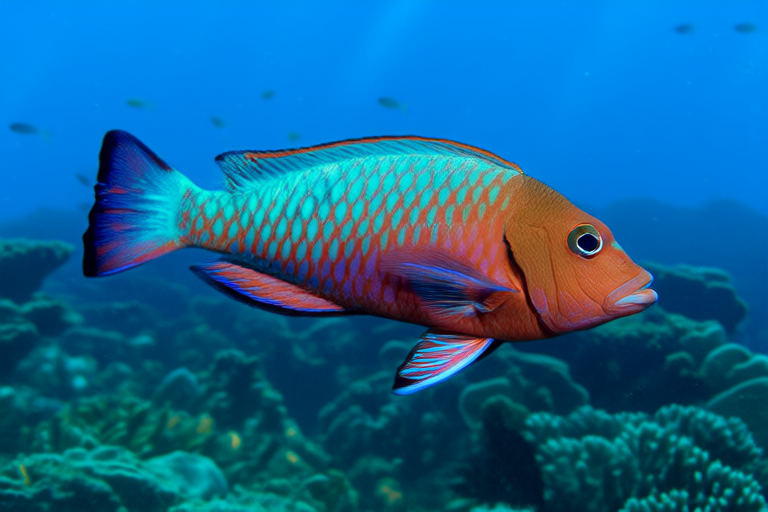
Dive Into Diversity: Exploring the World of Parrot Fish
Parrot fish are among the most colorful and fascinating creatures that inhabit the world’s coral reefs. These captivating marine animals are not only visually stunning but also play a crucial role in maintaining the health of their aquatic environments. With their vibrant hues and unique characteristics, parrot fish have long fascinated scientists and divers alike. This article delves into the world of parrot fish, exploring their diverse species, feeding habits, reproductive behaviors, and the threats they face. We will also examine their vital role in sustaining coral reef ecosystems.
Introduction to Parrot Fish
Parrot fish are members of the family Scaridae, which comprises approximately 90 species distributed across tropical and subtropical waters worldwide. They are easily recognizable by their beak-like mouths, which they use to scrape algae from coral and rock surfaces. The name ‘parrot fish’ comes from their distinctive teeth, which resemble the beak of a parrot. These teeth are set in a pharyngeal mill, a specialized structure located at the back of their throat that helps them grind up hard materials like coral and shell fragments.
Parrot fish are known for their striking colors and patterns, which can range from bright blues and greens to vivid oranges and reds. Their appearance varies depending on their age, sex, and species. Many species display distinct color changes as they mature, with males often being more brightly colored than females. Some species even exhibit complex social structures and mating rituals, adding to their allure.
Diversity in Species, Coloration, and Habitats
The family Scaridae is home to a wide variety of parrot fish species, each with its own unique traits and adaptations. One of the most well-known species is the queen parrot fish (Scarus vetula), found throughout the Caribbean Sea and western Atlantic Ocean. It is characterized by its iridescent blue-green body and yellow tail. Another notable species is the blue-green parrot fish (Scarus caeruleus), commonly seen in the Indo-Pacific region. This species features a striking blue-green coloration with a prominent white stripe running along its side.
Parrot fish can be found in a diverse array of habitats, including coral reefs, rocky shores, and seagrass beds. They prefer shallow waters near coastlines, where food sources such as algae and coral are abundant. Their distribution spans across the tropical and subtropical regions of the Atlantic, Indian, and Pacific Oceans. Some species are highly specialized, living exclusively within specific habitats or regions, while others are more widespread and adaptable.
Feeding Habits
Parrot fish are herbivores, primarily feeding on algae that grow on coral and rock surfaces. Using their beak-like mouths, they scrape away layers of algae and ingest small particles of coral and sand. This feeding behavior has significant ecological implications, as it helps prevent the overgrowth of algae on coral reefs and promotes healthy coral growth.
Interestingly, parrot fish produce a substantial amount of sand through their digestive process. As they consume algae and coral, their pharyngeal mills grind these materials into fine particles, which are then expelled through their gills. This process contributes significantly to the formation of sandy beaches in many tropical areas. In fact, some estimates suggest that parrot fish may be responsible for producing up to 80% of the sand on certain islands.
Reproductive Behaviors
Parrot fish exhibit a range of reproductive strategies, depending on the species. Many species are protogynous hermaphrodites, meaning they begin life as females and later transition to males. This reproductive strategy allows for greater flexibility in population dynamics and ensures genetic diversity within the species.
During mating season, parrot fish engage in elaborate courtship displays, often involving changes in coloration and synchronized swimming. Males typically establish territories and defend them against other males, while females gather in groups called harems. After spawning, the fertilized eggs float in the water column, eventually hatching into tiny larvae that drift with ocean currents before settling on suitable habitats.
Survival Threats
Despite their importance in marine ecosystems, parrot fish face numerous threats that put their survival at risk. Overfishing is one of the most significant challenges, as their meat is highly prized in many parts of the world. Unsustainable fishing practices, such as blast fishing and cyanide fishing, further exacerbate the problem. These methods not only target parrot fish but also cause extensive damage to coral reefs and other marine life.
In addition to overfishing, habitat destruction poses another major threat to parrot fish populations. Coastal development, pollution, and climate change all contribute to the degradation of coral reefs and other critical habitats. Rising sea temperatures and ocean acidification caused by climate change can lead to coral bleaching events, which reduce the availability of food and shelter for parrot fish.
Vital Role in Coral Reef Health
Parrot fish play a crucial role in maintaining the health of coral reefs by controlling algal growth and promoting coral regeneration. By grazing on algae, they prevent overgrowth that could smother coral polyps and hinder their ability to photosynthesize. This grazing activity also creates space for new coral colonies to settle and grow.
Furthermore, the sand produced by parrot fish through their digestive processes serves as an important substrate for coral larvae to settle on. This sand also helps buffer wave action and erosion, protecting coastal areas from storm damage. Without the presence of parrot fish, coral reefs would likely experience increased algal dominance, reduced biodiversity, and diminished resilience to environmental stressors.
Importance of Protection
Given the vital role that parrot fish play in maintaining healthy coral reef ecosystems, it is essential to implement conservation measures to protect these beautiful and important animals. Marine protected areas (MPAs) provide safe havens for parrot fish populations, allowing them to thrive without the pressures of overfishing and habitat destruction. Additionally, sustainable fishing practices, such as catch limits and gear restrictions, can help ensure that parrot fish populations remain stable.
Educating local communities about the importance of parrot fish and encouraging eco-friendly tourism practices can also contribute to their conservation. By raising awareness about the value of these animals and their role in marine ecosystems, we can inspire greater support for their protection.
In conclusion, parrot fish are not only mesmerizing creatures but also vital components of marine ecosystems. Their diverse species, vibrant coloration, and unique feeding habits make them stand out in the underwater world. However, they face numerous threats that jeopardize their survival. By understanding the importance of parrot fish and taking steps to protect them, we can help ensure the continued health and beauty of our coral reefs for generations to come.
