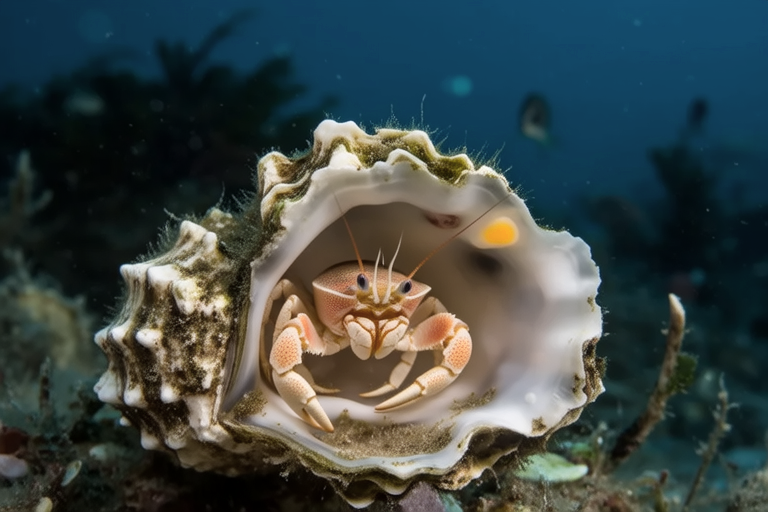
The Intricate Symbiosis of Pea Crabs and Shellfish Hosts
In the vast and mysterious ocean, countless species have evolved to live in harmony with one another. Among these, the relationship between pea crabs and their shellfish hosts stands out as both fascinating and little-known. These tiny crustaceans, measuring just a few millimeters in length, reside within the shells of bivalves such as oysters and clams, creating a unique and mutually beneficial partnership. This article delves into the intricacies of this symbiotic relationship, exploring the adaptations, benefits, and challenges faced by these marine organisms.
The Pea Crab’s Hidden Life
Pea crabs, belonging to the family Pinnotheridae, are small, delicate creatures that spend most of their lives tucked away inside the protective shells of their bivalve hosts. Their name is derived from their resemblance to the size and shape of a pea, making them easily overlooked by casual observers. Despite their diminutive size, pea crabs are highly specialized, having evolved to live harmoniously within their hosts.
Upon hatching, pea crab larvae enter the water column, where they search for a suitable host. Once they find a bivalve, they swim through the gills and settle into the mantle cavity, a space between the soft tissues and the shell. Here, they grow and develop, often remaining within the same host for their entire life cycle. The intimacy of this relationship is remarkable, with the crabs living in close proximity to their hosts’ vital organs.
Mutual Benefits: A Partnership Built on Trust
The relationship between pea crabs and their bivalve hosts is one of mutualism, meaning both parties benefit from the association. For the pea crabs, the primary advantage lies in the protection offered by the bivalve’s shell. This shield provides defense against predators, harsh environmental conditions, and the constant threat of predation. Additionally, the host supplies the pea crab with food, which it filters from the water passing through the bivalve’s gills. In return, the pea crab offers some benefits to its host.
One of the most significant contributions of pea crabs to their hosts is the stimulation of gametogenesis, the process of producing reproductive cells. Studies have shown that the presence of pea crabs can enhance the reproductive success of their hosts, potentially increasing the number of offspring produced. This mutual benefit is particularly advantageous in environments where resources are scarce or competition is high.
Moreover, pea crabs may help regulate the internal environment of their hosts. By feeding on microorganisms and detritus within the mantle cavity, they contribute to the overall health of the host, reducing the risk of infections and improving nutrient absorption. This symbiotic relationship highlights the complexity and interdependence of marine ecosystems.
Adaptations for Survival
The survival of pea crabs within their bivalve hosts depends on a series of remarkable adaptations. One of the most notable is their flattened body shape, which allows them to fit comfortably within the narrow spaces of the mantle cavity. Their reduced size also minimizes the impact on the host, ensuring that both parties can coexist without causing undue stress.
Pea crabs possess long, slender legs that are adapted for swimming through the water column in search of a new host. Once settled, these legs become more robust, serving as efficient tools for capturing food particles and grooming themselves. Their claws are relatively small but strong, enabling them to fend off potential threats within the confined space of their host.
Another crucial adaptation is the ability to tolerate the varying conditions within the host’s mantle cavity. The salinity, temperature, and oxygen levels can fluctuate significantly, yet pea crabs have evolved to thrive under these dynamic circumstances. Their physiology allows them to adjust to changes in their environment, ensuring their survival and the continued success of the symbiotic relationship.
Challenges in the Marine Environment
Despite the many advantages of this symbiotic relationship, pea crabs and their bivalve hosts face numerous challenges in their marine environment. Predators, including fish and larger crustaceans, pose a constant threat to the crabs, who must rely on their protective shell for defense. However, even within the safety of the host, the crabs are not entirely immune to predation. Some predators, such as certain species of starfish, have been observed attempting to pry open bivalves to access the hidden pea crabs inside.
Environmental factors also play a significant role in the success of this symbiotic relationship. Changes in water temperature, salinity, and pH can affect the health and survival of both the pea crabs and their hosts. Climate change, pollution, and overfishing can disrupt marine ecosystems, potentially leading to a decline in the availability of suitable hosts for pea crabs. As a result, the stability of this symbiotic relationship may be threatened by human activities and global environmental changes.
Furthermore, the introduction of invasive species can have unforeseen consequences for native populations. In some cases, non-native bivalves may compete with native species for resources, reducing the availability of suitable hosts for pea crabs. Additionally, invasive predators may target both the pea crabs and their hosts, further complicating the delicate balance of the ecosystem.
Conclusion: A Model of Marine Cooperation
The symbiotic relationship between pea crabs and their bivalve hosts exemplifies the intricate and often surprising partnerships that exist within marine ecosystems. Through their mutual benefits, adaptations, and shared challenges, these tiny crustaceans and their hosts demonstrate the power of cooperation in the face of adversity. As we continue to explore the mysteries of the ocean, it is essential to recognize and appreciate the complex relationships that sustain life beneath the waves.
Understanding the dynamics of this symbiosis not only enhances our knowledge of marine biology but also underscores the importance of preserving these delicate ecosystems. By protecting the habitats and resources that support these relationships, we can ensure the continued survival of these fascinating creatures and the vibrant communities they inhabit.
