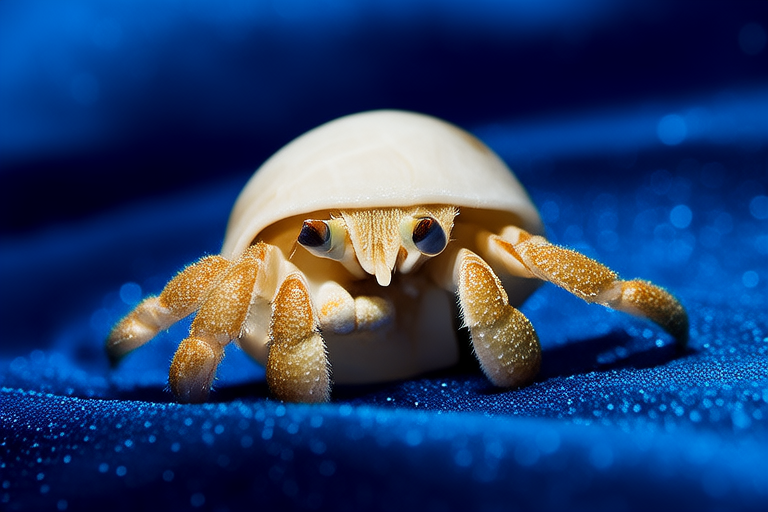
The Unique Life of Pea Crabs: Ocean’s Hidden Gems
Pea crabs, small yet fascinating creatures, inhabit the vast and mysterious depths of the ocean. These tiny crustaceans have captivated scientists and nature enthusiasts alike due to their unique lifestyle, intricate symbiotic relationships, and remarkable adaptations to their marine environment. Let us delve into the intriguing world of pea crabs, exploring their habitats, physical characteristics, and the significant role they play in marine ecosystems.
Habitat and Depth
Pea crabs thrive in the ocean’s depths, often residing within the bodies of larger marine organisms such as sea cucumbers and barnacles. Their preferred habitat is typically found at depths ranging from 10 to 200 meters below the water’s surface. This depth provides them with shelter from predators and access to abundant food sources. Interestingly, some species of pea crabs can survive in extreme conditions, including high pressure and low light levels, making them true survivors of the deep.
Symbiotic Relationships
One of the most striking aspects of pea crabs’ lives is their symbiotic relationship with other sea creatures. These crabs live inside the bodies of their hosts, forming a mutually beneficial partnership known as obligate commensalism. The host organism, usually a sea cucumber or barnacle, provides protection and a steady supply of nutrients for the pea crab. In return, the pea crab helps its host by consuming parasites and dead tissue, thereby promoting the host’s health.
In the case of sea cucumbers, pea crabs reside in the cucumber’s body cavity. They feed on the cucumber’s waste products and other organic matter, effectively cleaning the host’s internal environment. This relationship not only benefits the pea crab but also contributes to the overall health of the sea cucumber. Similarly, when living within barnacles, pea crabs help keep the barnacle clean by removing debris and harmful organisms.
Size and Physical Characteristics
As their name suggests, pea crabs are indeed small, typically measuring between 5 to 15 millimeters in length. Despite their diminutive size, they possess a hard exoskeleton that protects them from potential threats in their aquatic environment. Their bodies are flattened, allowing them to fit comfortably within the narrow spaces of their hosts. Pea crabs also have five pairs of legs, each adapted for specific functions, such as walking, swimming, and feeding.
Another notable feature of pea crabs is their reproductive strategy. Unlike many other crustaceans, female pea crabs carry their eggs in a brood pouch located on their undersides. This method of reproduction ensures the safety and development of their offspring until they are ready to hatch and fend for themselves in the ocean’s depths.
Adaptations to Marine Environment
To survive in their challenging underwater habitat, pea crabs have developed several remarkable adaptations. Their flattened bodies enable them to maneuver easily within the confined spaces of their hosts. Additionally, pea crabs have specialized appendages called maxillipeds, which they use to filter food particles from the water or host’s bodily fluids.
Pea crabs are also highly efficient swimmers, capable of moving swiftly through the water to escape danger or search for new hosts. Their ability to swim is further enhanced by their streamlined bodies and powerful tail fans. These adaptations allow pea crabs to thrive in their marine environment, where they face numerous challenges, including competition for resources and predation.
Scientific Interest and Recent Discoveries
Scientists are increasingly interested in studying pea crabs due to their unique biology and ecological importance. Recent research has focused on understanding the genetic makeup of these tiny crustaceans and how it influences their symbiotic relationships with hosts. One exciting discovery is the identification of specific genes responsible for enabling pea crabs to survive within their hosts without causing harm. This knowledge could lead to breakthroughs in medical science, particularly in developing treatments for parasitic infections.
Additionally, researchers are exploring the potential applications of pea crab-derived compounds in various fields, including biotechnology and pharmaceuticals. For instance, certain peptides found in pea crabs have shown promise in inhibiting the growth of cancer cells, offering new possibilities for cancer treatment. These findings highlight the importance of conserving marine biodiversity and continuing to study lesser-known species like pea crabs.
Role in Marine Ecosystems
Pea crabs play a crucial role in marine ecosystems by contributing to nutrient cycling and maintaining the health of their hosts. By consuming waste products and dead tissue, they help break down organic matter, facilitating the recycling of nutrients within the ecosystem. Furthermore, their presence within hosts helps control parasite populations, preventing the spread of diseases that could otherwise affect entire marine communities.
Despite their small size, pea crabs indirectly support larger marine organisms by improving the health of their hosts. For example, healthier sea cucumbers contribute to better water quality and sediment stability, benefiting other marine species that rely on these factors for survival. Thus, pea crabs are integral components of marine food webs, playing a vital role in maintaining the balance of their ecosystems.
Fascinating Facts and Common Misconceptions
Many people are surprised to learn that pea crabs are not just passive passengers within their hosts but actively contribute to the well-being of their companions. Contrary to popular belief, pea crabs do not harm their hosts; instead, they provide essential services that enhance the hosts’ survival chances. Another misconception is that all pea crabs are small; while most species are indeed tiny, some can grow up to 20 millimeters in length, making them relatively large compared to other microscopic crustaceans.
Did you know that pea crabs are among the few animals known to engage in cooperative breeding? In some cases, multiple male and female pea crabs will share a single host, working together to raise their young. This behavior is rare in the animal kingdom and underscores the complexity of pea crabs’ social structures. Additionally, researchers have discovered that pea crabs can change color to match their hosts, providing an extra layer of camouflage against potential predators.
Conclusion
The world of pea crabs is filled with wonder and intrigue, offering valuable insights into marine ecology and symbiosis. From their unique adaptations to their vital role in nutrient cycling, these tiny crustaceans demonstrate the importance of even the smallest organisms in maintaining the delicate balance of our oceans. As we continue to explore and understand the fascinating lives of pea crabs, it becomes clear that there is much more to learn about these hidden gems of the deep.
