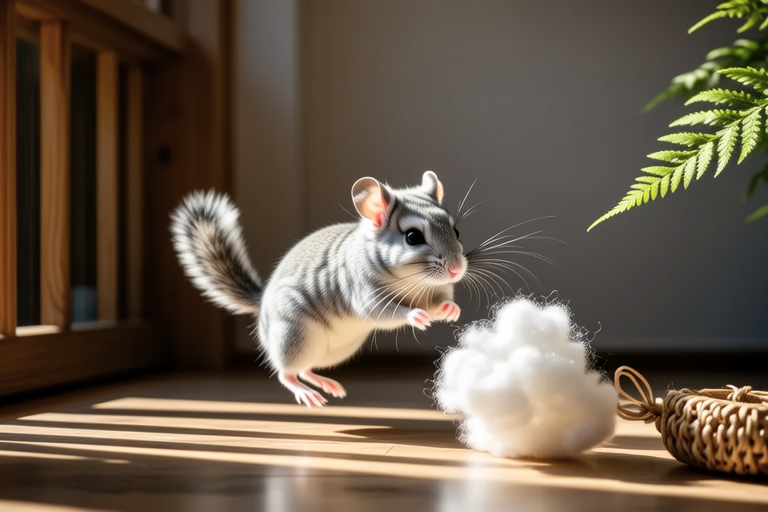
Chasing Clouds: How to Create a Dream Environment for Your Chinchilla
Welcome to the fascinating world of chinchillas! These fluffy, adorable creatures are native to the Andes Mountains in South America, where they thrive in high altitudes with cold climates. As pet owners, it’s our responsibility to provide them with an environment that closely resembles their natural habitat, ensuring their happiness and well-being. In this article, we’ll guide you through creating the perfect living space for your chinchilla, focusing on cage size, bedding, toys, environmental enrichment, temperature control, ventilation, diet, hygiene, and safety.
The Importance of Mimicking Their Natural Habitat
Chinchillas are nocturnal animals, which means they are most active during the night. They love to explore and play, so it’s essential to provide them with ample space and stimulation. By mimicking their natural habitat, you’re not only enhancing their quality of life but also promoting their physical and mental health. This article will help you understand what your chinchilla needs to feel at home and thrive in its new environment.
Choosing the Right Cage Size
The first step in creating a dream environment for your chinchilla is selecting the right cage. A spacious cage is crucial for their physical and mental well-being. Chinchillas need enough room to move around freely, jump, and climb. A minimum cage size of 30 inches wide, 24 inches deep, and 24 inches high is recommended for a single chinchilla. However, if you have more than one chinchilla, consider a larger cage or multiple cages to prevent stress and territorial disputes.
When choosing a cage, look for one with horizontal bars, as chinchillas love to climb and need sturdy perches. Avoid wire-bottomed cages, as they can cause foot injuries. Instead, opt for solid flooring or a wire grid covered with a soft material like fleece or paper towels.
Selecting Appropriate Bedding Materials
Proper bedding is essential for keeping your chinchilla comfortable and healthy. Chinchillas have sensitive respiratory systems, so it’s important to choose bedding that doesn’t produce dust or irritate their lungs. Shredded paper, aspen shavings, or recycled paper pellets are excellent choices. Avoid pine and cedar shavings, as they release aromatic oils that can be harmful to chinchillas.
Change the bedding regularly to maintain cleanliness and prevent odor buildup. Aim to clean the cage once a week or more frequently if necessary. Use a safe disinfectant, such as a diluted vinegar solution, to sanitize the cage and remove any bacteria or viruses.
Toys and Environmental Enrichment
Toys are an integral part of a chinchilla’s environment. Providing toys helps keep your chinchilla mentally stimulated and physically active. Chinchillas enjoy chewing, so offer them chew toys made from untreated wood or cardboard. These toys not only satisfy their natural urge to gnaw but also help wear down their teeth, preventing overgrowth.
In addition to chew toys, consider adding platforms, tunnels, and hammocks to your chinchilla’s cage. These items provide opportunities for climbing, hiding, and exploring, enriching their environment and promoting exercise. Rotate toys periodically to keep your chinchilla interested and engaged.
Temperature Control and Ventilation
Chinchillas are highly sensitive to heat, and temperatures above 80°F (27°C) can be dangerous. It’s essential to maintain a cool environment, ideally between 60°F and 70°F (15°C and 21°C). Provide adequate ventilation by ensuring the cage has proper airflow. If your home tends to get warm, consider using a fan or air conditioning to regulate the temperature. Always monitor the temperature inside the cage and take action if it becomes too hot.
During warmer months, avoid placing the cage near windows or direct sunlight, as these areas can quickly become overheated. If you live in a hot climate, consider using a cooling pad or a frozen water bottle wrapped in a towel as a makeshift ice pack to help keep your chinchilla cool.
Dietary Considerations
A balanced diet is crucial for your chinchilla’s health. The foundation of their diet should consist of high-quality chinchilla pellets, which provide the necessary nutrients for growth and maintenance. Offer fresh hay daily, as it aids digestion and promotes dental health. Timothy hay is a popular choice, but orchard grass and oat hay are also suitable.
Limit treats to a small portion of dried fruit or vegetables, such as raisins, carrots, or apples. Avoid feeding sugary or fatty foods, as they can lead to obesity and other health issues. Always provide fresh, clean water in a heavy-bottomed water bottle to prevent tipping.
Maintaining Hygiene and Safety
Hygiene is paramount in maintaining a healthy environment for your chinchilla. Clean the cage regularly, removing soiled bedding and replacing it with fresh material. Wipe down food bowls and water bottles weekly to prevent bacterial growth. Regularly inspect the cage for signs of wear and tear, and replace any damaged parts immediately.
Safety is another critical aspect of chinchilla care. Ensure that all cage accessories are securely fastened and free from sharp edges or loose parts. Supervise your chinchilla when it’s outside of the cage to prevent accidents. Avoid using any household cleaners or sprays near the cage, as their fumes can be harmful.
Creating a Comfortable Nesting Area
Chinchillas are natural nesters, and providing a cozy sleeping area is essential for their comfort. Use a nesting box or a small basket filled with soft, dust-free bedding, such as shredded paper or fleece. Place the nesting area in a quiet corner of the cage, away from drafts and bright lights. This secluded spot will give your chinchilla a sense of security and privacy.
Encouraging Natural Behaviors
One of the joys of owning a chinchilla is watching them engage in their natural behaviors. Provide opportunities for dust bathing, which is essential for maintaining healthy fur. Fill a shallow dish with fine, dust-free chinchilla dust and place it in the cage. Your chinchilla will instinctively roll and bathe in the dust, cleaning and conditioning its coat.
Chinchillas also enjoy social interaction. Spend time with your chinchilla daily, offering gentle handling and positive reinforcement. This bond-building activity will help your chinchilla feel secure and loved. Remember, patience and consistency are key when interacting with your chinchilla, as they can be skittish and easily stressed.
Finding Professional Help When Needed
If you encounter any health concerns or behavioral issues with your chinchilla, don’t hesitate to consult a veterinarian specializing in exotic pets. Early intervention can prevent minor problems from escalating into serious conditions. Regular check-ups are also recommended to ensure your chinchilla remains healthy and happy.
Conclusion
Caring for a chinchilla requires dedication and attention to detail. By following the guidelines outlined in this article, you can create a dream environment that mimics their natural habitat, ensuring your chinchilla’s happiness and well-being. Remember, every chinchilla is unique, so observe your pet’s behavior and adjust their environment accordingly. With love, care, and attention, your chinchilla will thrive in its new home.
