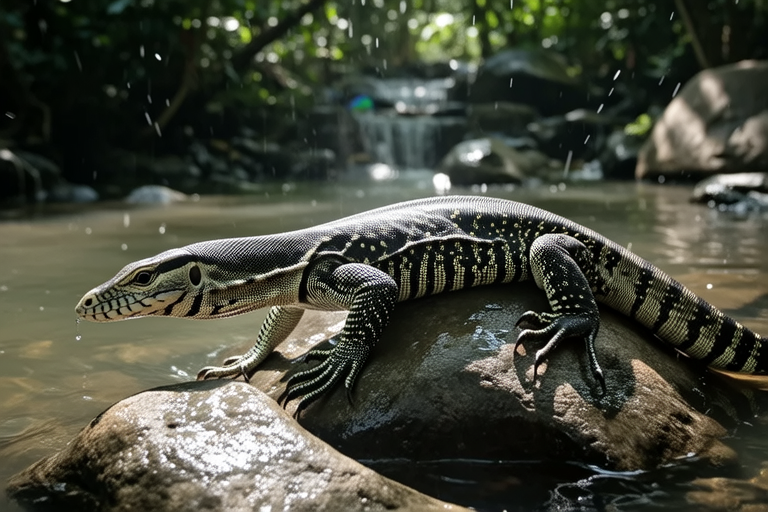
Adventures in Pet Ownership: Taming the Wild Heart of the Water Monitor
Welcome to the world of exotic pets, where the adventurous spirit of a water monitor (Varanus salvator) can captivate and challenge even the most seasoned reptile enthusiast. This article delves into the unique behaviors, care requirements, and challenges of owning a water monitor as a pet. We’ll explore the differences between expectations and reality for potential owners, provide tips on proper care, and share personal experiences to illustrate the bond that can develop between owner and pet.
The Allure of the Water Monitor
The water monitor, with its sleek, powerful body and sharp eyes, exudes a sense of wildness and adventure. Found across Southeast Asia, this species is one of the largest lizards in the world, capable of growing up to 8 feet in length. Their agility in water and on land, coupled with their striking appearance, makes them a popular choice for those seeking a truly unique pet.
Reality Check: Expectations vs. Reality
Before diving headfirst into water monitor ownership, it’s crucial to understand the stark difference between what you might expect and the reality of caring for such a large, wild animal. Many new owners are drawn by the idea of having a pet that’s both beautiful and fascinating, but they may underestimate the commitment involved.
One of the biggest misconceptions is the belief that a water monitor will be a docile, cuddly companion. In reality, these animals retain their wild instincts and can be unpredictable. While some individuals may become more accustomed to handling over time, they never fully lose their natural caution and wariness. Patience and respect are key when interacting with your water monitor.
Care Requirements: Habitat Setup
A well-planned habitat is essential for the health and happiness of your water monitor. Given their size and active nature, they require a spacious enclosure. A minimum size of 6 feet long, 3 feet wide, and 4 feet high is recommended for juveniles, while adults need much larger enclosures, often exceeding 10 feet in length.
The enclosure should include a deep water area, as water monitors spend a significant amount of time in water. The water should be clean and regularly changed to prevent bacterial growth. Additionally, provide sturdy branches and platforms for climbing and basking. UVB lighting is crucial for calcium absorption and overall health, so ensure you have appropriate lighting fixtures installed.
Diet and Feeding
Water monitors are carnivorous and require a varied diet to thrive. Juveniles can be fed small prey items like crickets, mealworms, and pinky mice. As they grow, their diet should expand to include larger prey such as adult mice, rats, fish, and occasionally feeder lizards. It’s important to offer a balanced diet to ensure optimal health and growth.
Feeding should be done carefully to avoid overfeeding, which can lead to obesity and related health issues. A good rule of thumb is to feed young monitors every other day and adults once every three days. Always remove uneaten food promptly to maintain hygiene.
Health Considerations
Like any pet, water monitors require regular veterinary check-ups. Common health issues include metabolic bone disease due to improper calcium intake, parasites, and respiratory infections. Regular monitoring of your monitor’s weight, activity level, and appetite can help catch potential problems early.
Veterinary care for water monitors can be challenging due to their size and wild nature. It’s important to find a veterinarian experienced with reptiles to ensure proper care and treatment.
Tips for Successful Ownership
Owning a water monitor is a rewarding yet demanding experience. Here are some tips to help you succeed:
- Patience: Be patient when building trust with your monitor. Allow them time to acclimate to their environment and get comfortable with your presence.
- Consistency: Maintain a consistent routine for feeding and handling to help your monitor feel secure.
- Education: Stay informed about the latest care practices and advancements in reptile husbandry.
- Community: Connect with other water monitor owners through forums and social media groups for support and advice.
Personal Experiences: Bonding with Your Monitor
Despite their wild nature, many owners develop a strong bond with their water monitors. One owner, Sarah, shared her story of bonding with her monitor named Charlie. “Charlie was initially very skittish,” she said. “But with time and patience, he started to recognize my scent and would come out of his hiding spots when I entered the room.”
Another owner, John, spoke about the joy of watching his monitor explore and play. “He loves to swim and climb. It’s amazing to see how gracefully he moves through his environment. He’s definitely earned his place in our family.”
Conclusion
Owning a water monitor is a unique and thrilling experience that requires dedication, knowledge, and a willingness to embrace the wild heart of these magnificent creatures. By understanding their needs and providing proper care, you can enjoy a rewarding relationship with your water monitor. Remember, the journey of taming the wild heart of the water monitor is as much about learning and growing together as it is about creating a safe and enriching home for your pet.
