Red-Eared Sliders vs Other Aquatic Turtles: A Comprehensive Guide
When it comes to keeping aquatic turtles as pets, the red-eared slider (Trachemys scripta elegans) stands out as one of the most popular choices. However, there are many other species of aquatic turtles that can make excellent companions too. In this article, we will explore the key differences between red-eared sliders and other aquatic turtles focusing on habitat requirements, diet, growth rates, care complexity, and common health issues. We’ll also provide tips for potential owners on choosing between these species based on lifestyle and available resources.
Physical Characteristics
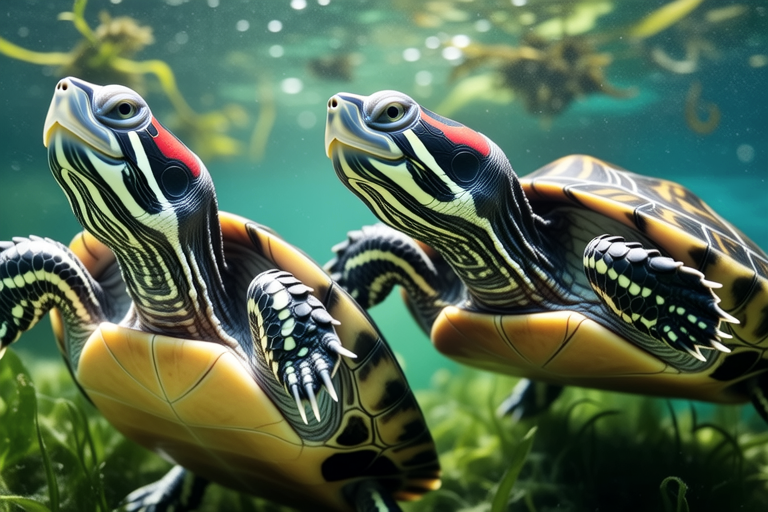
Red-eared sliders have distinct physical features that set them apart from other aquatic turtles. They have a dark green carapace (upper shell) with yellow stripes, while their plastron (lower shell) is yellow with a dark blotch near each corner. The most notable feature is the bright red stripe behind each eye, which gives the species its name. Other aquatic turtles may vary in coloration and markings, but generally share similar body shapes.
For example, painted turtles (Chrysemys picta) have a smooth, flattened carapace with red or yellow stripes along the sides. Their plastron is usually red or orange with dark blotches. Musk turtles (Sternotherus odoratus) are smaller than red-eared sliders and have a domed carapace with a single hinge that allows them to close their shell completely.
Habitat Requirements
Red-eared sliders require a large amount of space to thrive in captivity. As they grow, so does their need for room. An adult red-eared slider needs at least 40 gallons of water per inch of shell length. This means that a fully grown red-eared slider, which can reach up to 12 inches in length, would require an aquarium of at least 480 gallons. In contrast, smaller aquatic turtles like musk turtles only need about 20 gallons of water per inch of shell length.
The water quality is also crucial for all aquatic turtles. Red-eared sliders prefer slightly alkaline water with a pH between 7.0 and 8.0. They also require access to both water and land areas, as they spend part of their time basking. Painted turtles, on the other hand, prefer more neutral water conditions (pH between 6.5 and 7.5). Musk turtles tend to spend more time submerged and less time basking, so they need less space above water.
Diet
Red-eared sliders are omnivorous and their diet changes as they grow. Juvenile red-eared sliders eat mostly protein-rich foods such as insects, worms, and small fish. As they mature, their diet shifts towards more plant-based foods like aquatic plants, fruits, and vegetables. Adult red-eared sliders should be fed a varied diet that includes commercial turtle pellets, fresh vegetables, and occasional live food.
Painted turtles also have an omnivorous diet, but they tend to consume more plant matter than red-eared sliders. Musk turtles, however, are primarily carnivorous and feed on small invertebrates, snails, and carrion. Providing a balanced diet for your aquatic turtle is essential for their overall health and well-being.
Growth Rates
Red-eared sliders are known for their rapid growth rate, especially during their juvenile stages. Under optimal conditions, a young red-eared slider can grow up to 4 inches in its first year. After that, their growth slows down, but they can still add an inch or two each year until they reach maturity. Painted turtles and musk turtles also grow quickly when young, but their growth rates are slower compared to red-eared sliders.
Musk turtles typically reach their full size within 5-7 years, while painted turtles take around 3-5 years to mature. Red-eared sliders can take up to 10 years to reach full size, depending on genetics and environmental factors.
Care Complexity
Red-eared sliders are relatively easy to care for once you understand their specific needs. However, setting up an appropriate habitat and maintaining it can be challenging for beginners. The initial setup costs for a red-eared slider tank can be high due to the large size required and the specialized equipment needed to maintain water quality.
Painted turtles are generally easier to care for than red-eared sliders because they require less space and are more adaptable to different water conditions. Musk turtles are also easier to care for because they don’t need as much space above water and can tolerate a wider range of water temperatures.
Common Health Issues
All aquatic turtles are susceptible to certain health problems, but some species are more prone to specific issues. Red-eared sliders are particularly vulnerable to respiratory infections, shell rot, and metabolic bone disease if their calcium intake is insufficient. These conditions can be prevented by providing proper lighting, temperature, and nutrition.
Painted turtles are more prone to vitamin A deficiency, which can lead to swollen eyes and respiratory infections. Musk turtles are more likely to develop fungal infections if the water quality is poor or if they are kept in overcrowded conditions.
Behavior and Interaction with Humans
Red-eared sliders are curious and active turtles that enjoy exploring their environment. They are generally docile and can become accustomed to handling over time, making them suitable pets for families with children. However, it’s important to handle them gently and frequently to prevent stress-related health issues.
Painted turtles are more shy and may retreat into their shells when approached. They are less likely to interact with humans but can still be enjoyable pets to observe. Musk turtles are the most reclusive of the three species and are rarely seen outside of their tanks. They are not recommended for frequent handling.
Tips for Potential Owners
If you’re considering getting an aquatic turtle as a pet, here are some tips to help you choose the right species:
- Lifestyle: If you have a busy lifestyle and limited time for daily care, a painted turtle might be a better choice than a red-eared slider. Painted turtles are more independent and require less attention.
- Available Resources: If you have limited space or budget, a musk turtle could be a good option. They require less space and are less expensive to maintain than red-eared sliders.
- Interaction: If you want a turtle that enjoys interacting with humans, a red-eared slider would be a great choice. They are curious and enjoy being handled.
- Experience Level: If you’re new to keeping aquatic turtles, a painted turtle or musk turtle might be easier to care for than a red-eared slider. They are more forgiving of beginner mistakes and require less specialized care.
Conclusion
Choosing the right aquatic turtle for your home depends on several factors, including habitat requirements, diet, growth rates, care complexity, and common health issues. Red-eared sliders are popular pets due to their striking appearance and interactive nature, but they require more space and specialized care than other aquatic turtles. Painted turtles and musk turtles are also great options for those looking for a low-maintenance pet or who have limited space. By understanding the unique needs of each species, you can ensure that your aquatic turtle thrives in its new home.
