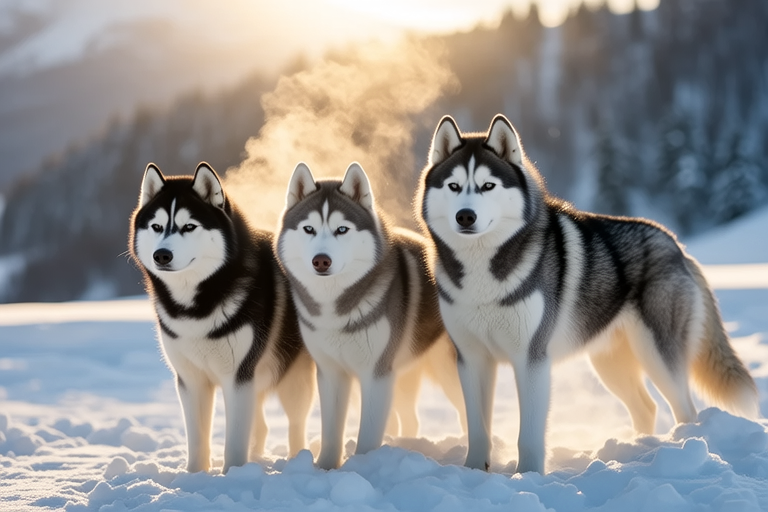
Winter Warriors: Discovering the True Spirit of the Siberian Husky
In the vast, frozen expanses of Siberia, where temperatures can plummet to unimaginable lows, a breed of dog has thrived, embodying the very essence of endurance and resilience. The Siberian Husky, with its striking blue or brown eyes, thick double coat, and unmistakable wolf-like appearance, is more than just a pet; it is a symbol of strength, loyalty, and unwavering spirit. This article delves into the rich history, unique traits, and enduring legacy of the Siberian Husky, exploring why these dogs have earned the title of ‘Winter Warriors.’
The Historical Background
The origins of the Siberian Husky can be traced back to the Chukchi people of northeastern Asia, who bred these dogs specifically for their ability to withstand extreme cold and travel long distances efficiently. Originally known as Chukchi Dogs, they were essential for survival in harsh Arctic conditions, pulling sleds laden with supplies across vast, unforgiving landscapes. Their role extended beyond mere transportation; they were companions, protectors, and integral members of the Chukchi community.
The first Siberian Huskies were brought to Alaska in 1908 by fur trader William Goosak. They quickly gained recognition for their exceptional speed and stamina during the All-Alaska Sweepstakes, a prestigious sled-dog race. In 1925, the breed’s reputation soared when a team of Siberian Huskies made an emergency delivery of diphtheria serum to Nome, Alaska, saving countless lives. This event, known as the “Great Race of Mercy,” cemented the Siberian Husky’s place in history and showcased their unparalleled endurance and reliability.
Physical Characteristics Suited for Cold Climates
Siberian Huskies are marvels of evolutionary adaptation, perfectly equipped to thrive in some of the coldest environments on Earth. Their most distinctive feature is their thick, double-layered coat, which provides excellent insulation against the biting winds and sub-zero temperatures. The outer layer consists of long, straight guard hairs, while the undercoat is dense and soft, offering superior warmth. Additionally, their coat changes seasonally, shedding heavily in spring and fall to regulate body temperature.
Beyond their impressive coat, Siberian Huskies possess other physical attributes that enhance their suitability for life in the Arctic. Their small, furry ears minimize heat loss, and their feet are webbed, allowing them to move effortlessly through deep snow. These dogs also have a high metabolism, enabling them to maintain body heat even in the harshest conditions. Their almond-shaped eyes, often described as having a ‘wolfish’ look, not only add to their striking appearance but also provide clear vision in low-light conditions, a crucial advantage in the perpetual darkness of winter.
The Role in Sled Racing and Transportation
For centuries, Siberian Huskies have played a vital role in human transportation, particularly in regions where roads are nonexistent or impassable due to snow and ice. Their speed, agility, and endurance make them ideal for sled racing, a sport that tests both the dogs and their handlers. In addition to their physical prowess, Siberian Huskies are renowned for their cooperative nature, working harmoniously within a team. Each dog knows its position and contributes to the overall efficiency of the sled.
One of the most famous examples of Siberian Huskies in action is the story of Balto, the lead dog of the 1925 serum run to Nome. Under the guidance of musher Gunnar Kaasen, Balto and his team braved treacherous conditions, traveling over 674 kilometers (419 miles) in just five and a half days. Their heroic efforts saved many lives and solidified the breed’s reputation as reliable and fearless winter warriors.
Anecdotes Illustrating Loyalty and Strength
The bond between humans and Siberian Huskies is profound, often characterized by unwavering loyalty and a shared sense of adventure. One such tale involves a Siberian Husky named Togo, who, like Balto, was part of the 1925 serum relay. While Balto received much of the public acclaim, Togo’s journey was equally remarkable. He led a team of twenty dogs over the most dangerous leg of the journey, covering nearly 91 kilometers (57 miles) in just one day. His dedication and bravery exemplify the enduring spirit of the Siberian Husky.
Another touching story involves a Siberian Husky named Buck, who became separated from his family during a storm. Despite the harsh weather and the dangers of the wilderness, Buck managed to find his way back home, covering a distance of over 300 kilometers (186 miles) in just three days. His determination and loyalty highlight the extraordinary capabilities of these dogs and the deep connection they share with their human companions.
The Bond Between Humans and Siberian Huskies
The relationship between humans and Siberian Huskies is built on mutual respect, trust, and affection. These dogs are incredibly social animals, thriving in the company of their human families. They are known for their playful and affectionate nature, often forming strong bonds with children. However, their independent streak can sometimes be challenging for novice owners, requiring patience and understanding.
Despite their independence, Siberian Huskies are highly trainable and responsive to positive reinforcement techniques. Consistent training and socialization are key to developing a well-behaved and obedient companion. It is important to remember that these dogs were bred to work, and they require mental stimulation and physical exercise to thrive. Providing them with opportunities for play and activity will help keep them happy and healthy.
Tips for Potential Owners
If you’re considering adding a Siberian Husky to your family, there are several factors to keep in mind. First and foremost, ensure that you have the time and resources to meet their exercise needs. Siberian Huskies are energetic dogs that require regular physical activity to prevent boredom and destructive behavior. Daily walks, runs, or access to a secure area where they can run freely are essential.
Secondly, consider the grooming requirements of these dogs. Their thick coats require regular brushing, especially during shedding seasons, to prevent matting and skin issues. Additionally, their nails should be trimmed regularly, and their teeth should be brushed to maintain good oral hygiene.
Lastly, it is crucial to provide proper socialization and training from an early age. Siberian Huskies are intelligent and curious, and they benefit greatly from structured training sessions. Positive reinforcement methods, such as treats and praise, are highly effective in teaching them basic commands and good manners.
Conclusion
Siberian Huskies are more than just beautiful dogs; they are living testaments to the power of resilience, loyalty, and cooperation. From their origins among the Chukchi people to their modern-day roles as beloved pets and competitive athletes, these dogs have consistently demonstrated their remarkable abilities and enduring spirit. Whether traversing icy terrains or playing in the backyard, Siberian Huskies embody the true essence of winter warriors, ready to face whatever challenges come their way with grace and determination.
For those fortunate enough to share their lives with a Siberian Husky, the rewards are immeasurable. Their unwavering loyalty, playful nature, and deep bond with their human companions make them cherished members of the family. By understanding and meeting their needs, we can ensure that these magnificent creatures continue to thrive and inspire for generations to come.
