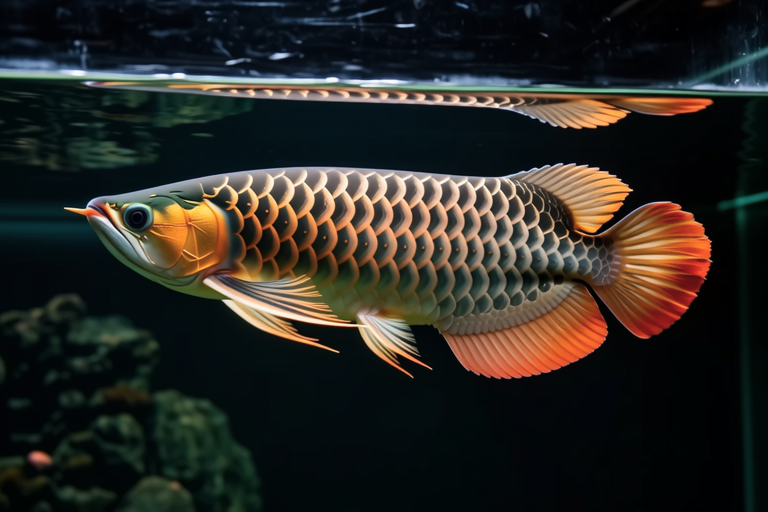
Spotlight on the Arowana: The Fish That Commands Respect and Reverence in Every Tank
In the world of ornamental fishkeeping, few species command as much admiration, awe, and cultural reverence as the arowana. With its regal bearing, shimmering scales, and commanding presence, the arowana is more than just a fish—it is a living masterpiece, a symbol of elegance, power, and fortune. Whether gliding through the still waters of a private home aquarium or showcasing its grandeur in public exhibits, the arowana stands as an undeniable centerpiece, captivating all who witness it.
Renowned for its striking appearance, the arowana possesses a sleek, elongated body that tapers gracefully toward its tail, giving it a streamlined silhouette reminiscent of a river-dwelling aristocrat. Its most mesmerizing feature is its iridescent scales—shifting in hues of gold, silver, green, and deep blue depending on the light. These scales catch and reflect sunlight with such brilliance that they seem to emit their own inner glow. Coupled with a prominent, powerful dorsal fin that extends dramatically along its back like a royal crest, the arowana moves with a sense of purpose and poise rarely seen in other freshwater species.
Origins and Cultural Significance: From Southeast Asian Rivers to Global Icon
The arowana’s story begins in the warm, slow-moving rivers and swamps of Southeast Asia. Native to countries such as Indonesia, Malaysia, Thailand, and parts of Vietnam, these fish thrive in environments rich in vegetation and natural cover. Their evolutionary adaptations—such as a highly developed swim bladder capable of breathing air at the surface—allowed them to survive in oxygen-poor waters, making them resilient inhabitants of tropical floodplains and estuaries.
However, it is not only their biology that has earned them global acclaim—it is their deep-rooted cultural significance, particularly in East and Southeast Asia. In China, where the concept of feng shui governs spatial harmony and energy flow, the arowana is considered a symbol of prosperity, luck, and protection. Known as the “Dragon Fish” due to its serpentine form and dragon-like features, it is believed to attract wealth and ward off negative energies. This belief has elevated the arowana from a mere pet to a prized possession, often associated with high social status and financial success.
In Singapore, where aquarism is both a hobby and a cultural tradition, the arowana holds a similarly revered place. It is common to see homes and offices adorned with large tanks housing these majestic fish, especially during festive seasons. Some collectors even go so far as to perform rituals or consult feng shui masters before acquiring or placing an arowana tank, underscoring the profound respect it commands beyond mere aesthetics.
Species Spotlight: The Most Coveted Arowanas
While there are several species within the arowana family, two stand out in popularity and prestige: the Asian Arowana (Scleropages formosus) and the African Arowana (Heterotis niloticus).
Asian Arowana (Scleropages formosus): Often referred to as the “Golden Dragon” or “Red Dragon,” this species is the most sought-after due to its vibrant coloration and symbolic value. Ranging from golden-orange to deep maroon, the quality of its scales—especially the presence of a distinct, symmetrical pattern known as “gold spots”—determines its market value. Exceptional specimens can fetch tens of thousands of dollars, making them among the most expensive aquarium fish in the world.
African Arowana (Heterotis niloticus): Found in the Nile River basin and other African waterways, this species is slightly less flashy but equally impressive in size and demeanor. Reaching lengths of up to four feet, it boasts a robust build and distinctive black and silver mottling. Though less culturally significant than its Asian counterpart, the African arowana is admired for its unique appearance and hardiness, making it a favorite among experienced aquarists seeking a challenge.
Essential Care Requirements: More Than Just a Pretty Face
Despite their elegant appearance, arowanas are not suitable for casual hobbyists. They demand a level of commitment, space, and expertise that far exceeds that of typical community fish. Understanding their care needs is crucial for their well-being and longevity.
Tank Size: One of the most critical aspects of arowana keeping is tank size. Due to their rapid growth and active nature, a minimum of 300 gallons is recommended for a single adult arowana. Larger tanks—500 gallons or more—are ideal, especially for long-term housing. A spacious environment allows them to swim freely and exhibit natural behaviors, reducing stress and promoting health.
Water Quality: Arowanas are sensitive to fluctuations in water parameters. Maintaining stable conditions is paramount. Ideal water temperatures range between 76°F and 82°F (24°C–28°C), with a pH level between 6.5 and 7.5. Ammonia and nitrite levels must be kept at zero, while nitrates should remain below 20 ppm. Regular water changes—up to 30% weekly—are essential to prevent toxin buildup and maintain clarity.
Feeding Habits: Arowanas are carnivorous and require a diet rich in protein. While they may accept high-quality pellets formulated specifically for large predatory fish, many enthusiasts prefer supplementing with live or frozen foods such as feeder fish, shrimp, crickets, and earthworms. This not only mimics their natural diet but also stimulates hunting behavior, which contributes to mental stimulation and overall vitality.
Stability and Environment: Arowanas thrive in calm, well-planted environments with ample open swimming space. While some decor and hiding spots are beneficial, overly cluttered tanks can lead to stress and territorial disputes. A strong filtration system, coupled with aeration if needed, ensures optimal water movement and oxygenation. Additionally, lighting should be moderate—too bright or too dim can affect their activity patterns and coloration.
Dispelling Myths: Are Arowanas Aggressive or Difficult to Keep?
One of the most persistent misconceptions about arowanas is that they are inherently aggressive or impossible to care for. While it is true that they can display territorial behavior—especially when housed with smaller or more timid fish—this is not a universal trait. With proper tank management and careful species selection, arowanas can coexist peacefully with compatible tank mates, such as larger catfish or certain cichlids.
Moreover, while they do require specific conditions, the idea that they are “difficult” is often overstated. The challenges stem not from complexity, but from the responsibility involved. Arowanas can live 15 to 20 years—or even longer with exceptional care. This long lifespan demands a serious commitment to consistent maintenance, financial investment, and emotional dedication. For those willing to meet these requirements, the rewards are immense: a sentient, intelligent fish that forms bonds with its keeper, recognizes faces, and responds to feeding routines with curiosity and anticipation.
Experienced aquarists emphasize that success with arowanas lies in patience, observation, and consistency. “You’re not just feeding a fish,” says Lina Tan, a veteran arowana breeder from Kuala Lumpur. “You’re managing a living ecosystem. Every detail—from water chemistry to feeding schedule—matters. But when you see your arowana leap at the surface for food or glide past the glass with grace, it’s a reminder of why we do this.”
The Legacy of the Arowana: Beauty, Intelligence, and Enduring Appeal
What makes the arowana truly extraordinary is not just its physical beauty or cultural symbolism—it is its intelligence and personality. Studies have shown that arowanas possess keen cognitive abilities, including problem-solving skills and the capacity to learn from experience. Many owners report that their arowanas develop routines, respond to their names, and even follow hand movements around the tank, demonstrating a level of awareness uncommon in most aquarium fish.
This combination of aesthetic splendor, cultural resonance, and behavioral sophistication cements the arowana’s status as one of the most respected fish in the aquatic world. In professional aquariums, they are featured in signature displays, drawing visitors from around the globe. In private homes, they serve as living heirlooms—passed down through generations, each one a testament to care, passion, and connection.
More than a decoration, the arowana represents a philosophy of stewardship. It reminds us that responsible ownership means more than just providing food and clean water—it involves understanding a creature’s needs, respecting its natural instincts, and creating a life of dignity and purpose. In doing so, the arowana transcends its role as a pet; it becomes a partner in a shared journey of discovery and wonder.
Conclusion: The Timeless Allure of the Dragon Fish
The arowana is more than a fish. It is a symbol of legacy, resilience, and beauty in motion. From the murky rivers of Southeast Asia to the gleaming tanks of modern homes, its journey reflects humanity’s enduring fascination with nature’s wonders. Its shimmering scales echo ancient myths, while its intelligent gaze speaks to a depth of character rarely found in the animal kingdom.
For those drawn to the arowana, the decision is never merely about adding a fish to a tank—it is about embracing a lifelong commitment to excellence in care, appreciation of natural design, and reverence for life. Whether admired for its golden hue in a Chinese home or celebrated in a Singaporean exhibition hall, the arowana continues to command respect and awe, not because of what it is, but because of what it represents: the enduring power of beauty, wisdom, and the quiet majesty of the natural world.
In every ripple of its tail, in every graceful arc through the water, the arowana tells a story—one of survival, of culture, of connection. And for those lucky enough to share a tank with this magnificent creature, that story becomes their own.
