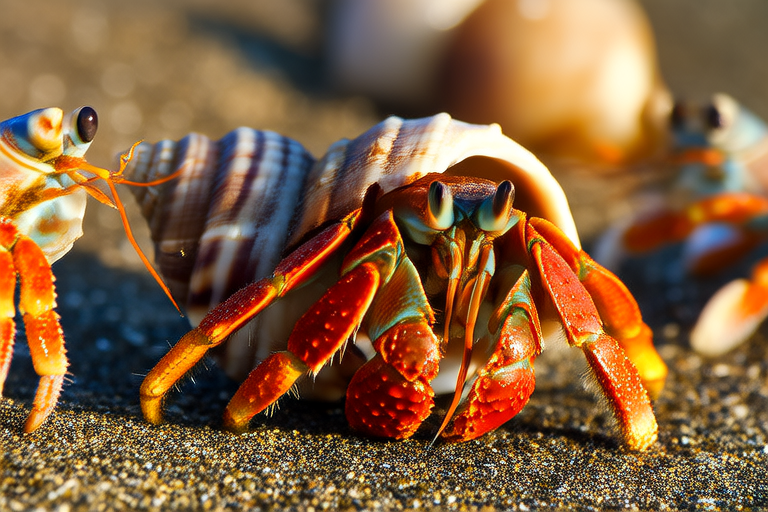
Hermit Crabs: Unique Characteristics and Behaviors
Hermit crabs are fascinating creatures that have captured the imagination of many with their intriguing behaviors and unique adaptations. These small crustaceans, found in various aquatic and semi-aquatic environments around the world, are known for their distinctive habit of living inside discarded mollusk shells. This article explores the unique characteristics and behaviors of hermit crabs, focusing on their shell-switching process, social behaviors, habitat preferences, dietary habits, and the challenges they face in both natural and captive environments.
The Shell-Switching Process
One of the most notable features of hermit crabs is their shell-switching behavior. Hermit crabs do not produce their own shells but instead inhabit the empty shells of other organisms, such as sea snails. As they grow, they must periodically switch to larger shells to accommodate their expanding bodies. This process is crucial for their survival, as the shell provides protection from predators and harsh environmental conditions.
The choice of a new shell is influenced by several environmental factors. Hermit crabs prefer shells that offer ample space for their growing bodies while also providing adequate protection. They often inspect potential shells carefully, turning them over and feeling the interior with their claws before making a decision. The availability of suitable shells can be limited in certain areas, leading to competition among hermit crab populations. In some cases, smaller hermit crabs may even steal shells from larger individuals if they are desperate.
Social Behaviors and Interactions
Contrary to popular belief, hermit crabs are not solitary creatures. While they do not live in large colonies like some other crustaceans, they are highly social animals that interact frequently within their communities. Hermit crabs engage in various forms of communication, including chemical signals, touch, and sound. For example, they may use pheromones to signal danger or attract mates.
Hermit crabs are also known to exhibit cooperative behaviors, such as sharing resources and working together to find food. In some instances, they have been observed stacking themselves on top of each other to reach higher ground or access food sources. This stacking behavior is particularly common during low tide when hermit crabs gather on rocky shores.
Habitat Preferences
Hermit crabs can be found in a wide range of habitats, from tropical coral reefs to temperate rocky shores. Their preferred environments typically include areas with abundant food sources, shelter, and suitable shells for habitation. Many species of hermit crabs are adapted to life in the intertidal zone, where they can withstand periodic exposure to air and fluctuating water levels.
Some hermit crabs are fully aquatic and spend their entire lives submerged in water, while others are semi-aquatic and require regular access to both land and water. In captivity, it is essential to replicate these conditions as closely as possible to ensure the well-being of pet hermit crabs.
Dietary Habits
Hermit crabs are omnivorous scavengers, feeding on a variety of organic matter, including algae, decaying plant material, and small animals. In the wild, they play an important role in maintaining the health of their ecosystems by breaking down dead organisms and recycling nutrients. Captive hermit crabs can be fed a diet consisting of commercial hermit crab food, fresh fruits and vegetables, and occasional protein sources such as fish flakes or boiled eggs.
Challenges in Natural and Captive Environments
Hermit crabs face numerous challenges in both their natural and captive environments. In the wild, they must contend with predation, competition for resources, and changes in their habitats due to human activities such as coastal development and pollution. Climate change also poses a significant threat, as rising sea temperatures and ocean acidification can negatively impact their ability to find suitable shells and maintain their health.
In captivity, hermit crabs require specific care to thrive. It is crucial to provide them with an appropriate enclosure, including a substrate for burrowing, fresh and saltwater dishes, and a variety of shells for shell-switching. Maintaining proper humidity levels and temperature gradients is also essential for their well-being. Additionally, hermit crabs can be sensitive to certain chemicals, so it is important to avoid using harmful substances in their enclosures.
Interesting Facts and Myths
There are many interesting facts and myths surrounding hermit crabs. One common myth is that hermit crabs will abandon their shells if they are not provided with enough space. In reality, hermit crabs are quite adaptable and will often remain in their current shell until a more suitable option becomes available. Another misconception is that hermit crabs are completely blind. While their eyesight is limited, they can still detect light and movement, which helps them navigate their environment.
One fascinating fact about hermit crabs is that they can live for several decades under optimal conditions. Some species of hermit crabs have been known to live up to 30 years or more in the wild. Additionally, hermit crabs have a unique respiratory system that allows them to breathe both in and out of water. This adaptation enables them to survive in a variety of environments, from shallow tidal pools to deeper ocean waters.
Conclusion
Hermit crabs are remarkable creatures with many unique characteristics and behaviors that make them fascinating subjects of study. From their shell-switching process to their social interactions and habitat preferences, these small crustaceans have adapted to thrive in diverse environments around the world. By understanding the challenges they face in both natural and captive settings, we can better appreciate the importance of preserving their habitats and ensuring the well-being of these captivating creatures.
