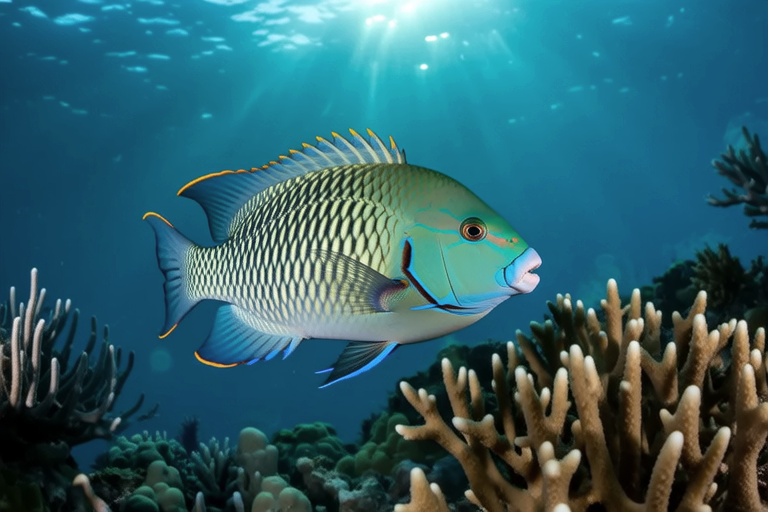
Parrot Fish: The Underwater Artists of the Reef
In the vibrant tapestry of marine life, few creatures capture the imagination quite like the parrot fish. Known for their dazzling colors and unique appearance, these fish are more than just eye candy; they play a crucial role in maintaining the health of coral reefs. Let us dive into the world of parrot fish, exploring their colorful lives, their significant contributions to reef ecosystems, and the urgent need to protect them.
The Vibrant Colors and Unique Appearance
Parrot fish are easily recognizable by their distinct features and vivid hues. Ranging from electric blues to deep purples, their scales shimmer like precious stones beneath the ocean’s surface. Their mouths, resembling parrot beaks, give them their name and are perfectly adapted for their diet. These fish can grow up to several feet long, making them a sight to behold among the coral reefs. Their unique appearance is not just aesthetically pleasing but also serves a functional purpose, providing camouflage and protection against predators.
The Artistic Grazers of the Reef
One of the most fascinating aspects of parrot fish is their role as grazers. They are the artists of the reef, meticulously cleaning the coral by eating algae that would otherwise smother it. This process is vital for the survival of the reef, as unchecked algae growth can choke off sunlight and nutrients that corals need to thrive. Parrot fish graze with precision, using their strong teeth to scrape away at the algae without damaging the delicate coral structures.
Their feeding habits involve biting into the coral and grinding it down to extract the algae. This seemingly destructive behavior is actually beneficial, as it helps to keep the reef clean and healthy. After digesting the algae, parrot fish excrete the remaining coral material as fine sand. This process contributes significantly to the formation of beaches and islands in tropical regions. Thus, the parrot fish not only maintain the health of the reef but also indirectly support the coastal environments that depend on them.
Variety of Species and Geographical Distribution
The parrot fish family comprises over 90 species, each with its own distinct features and geographical distribution. Some species, like the queen parrot fish, are known for their striking patterns and vibrant colors. Others, such as the blue-green parrot fish, have a more subdued palette but are equally captivating. These variations in color and pattern are thought to play a role in communication and mate selection.
Geographically, parrot fish can be found in tropical and subtropical waters around the world. They are particularly abundant in the Indo-Pacific region, where they contribute to the rich biodiversity of the area. Each species has adapted to its specific environment, with some thriving in shallow waters close to the shore, while others prefer the deeper parts of the reef.
The Importance of Protecting Parrot Fish and Reefs
Despite their critical role in maintaining the health of coral reefs, parrot fish face numerous threats. Pollution, overfishing, and habitat destruction pose significant risks to their populations. As human activities continue to impact marine environments, the survival of parrot fish and the reefs they inhabit becomes increasingly precarious.
Protecting parrot fish is essential not only for their sake but also for the countless other species that depend on healthy reefs. By safeguarding these underwater artists, we can help preserve the intricate balance of marine ecosystems. Conservation efforts, such as establishing marine protected areas and promoting sustainable fishing practices, are crucial steps toward ensuring the future of parrot fish and the reefs they call home.
In conclusion, parrot fish are much more than beautiful creatures; they are the unsung heroes of the coral reef. Through their grazing habits, they maintain the health of the reef, contributing to the overall biodiversity of marine ecosystems. Their vibrant colors and unique appearance make them a joy to observe, and their role as artists of the reef underscores their importance in the underwater world. Let us strive to protect these remarkable fish and the reefs they inhabit, ensuring that future generations can marvel at the wonders of the ocean.
