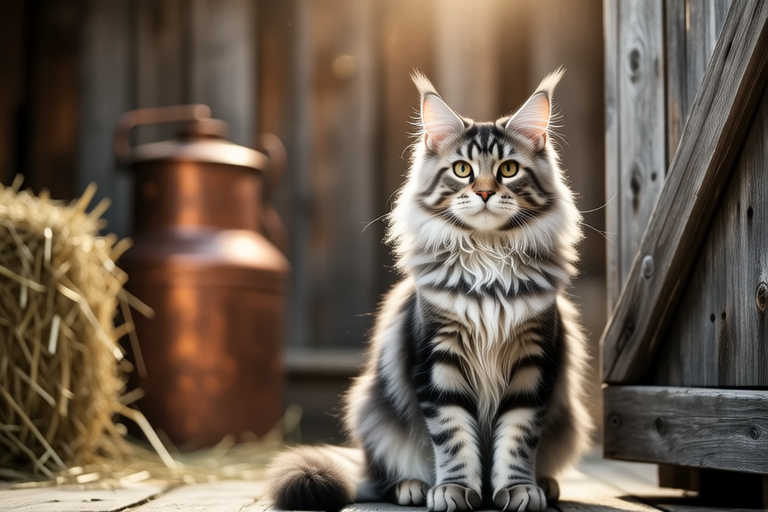
The Evolution of the Maine Coon Cat: From Farm Helper to Feline Favorite
The Maine Coon cat has a fascinating history that spans centuries, evolving from a practical farm helper to one of the most beloved and popular cat breeds today. This article delves into the origins, characteristics, and cultural impact of the Maine Coon, offering an engaging exploration for cat enthusiasts and history buffs alike.
Origins and Theories About Ancestry
The exact origins of the Maine Coon remain shrouded in mystery, with several theories attempting to unravel the breed’s complex ancestry. One popular theory suggests that the breed descended from longhaired cats brought by European seafarers to New England in the 17th century. These cats interbred with local short-haired cats, resulting in a hardy, adaptable breed well-suited to the harsh New England climate. Another theory posits that the Maine Coon may be the offspring of domestic cats and raccoons, a misconception arising from the breed’s bushy tail and striped coat, which resemble those of raccoons. However, this notion lacks scientific backing and is now considered folklore.
Suitable for Farm Life
The Maine Coon’s distinctive features made it an ideal companion for farmers in New England. Their large size, sturdy build, and dense, water-resistant fur provided excellent protection against the cold, wet weather common in the region. Additionally, their keen sense of hearing and sharp eyesight allowed them to effectively hunt rodents, a significant benefit for farmers seeking to protect their crops and livestock.
Physical Traits and Personality
Maine Coons possess a number of unique physical traits that distinguish them from other cat breeds. They are known for their large size, with males typically weighing between 13 to 18 pounds and females ranging from 9 to 12 pounds. Their long, shaggy coats come in a variety of colors and patterns, including brown tabby, seal tabby, and blue tabby. One of the breed’s most striking features is its tufted ears and paws, which offer additional warmth and protection in cold environments.
Besides their physical attributes, Maine Coons are renowned for their friendly and sociable personalities. They are often described as “dog-like” due to their affectionate nature, playfulness, and tendency to follow their owners around the house. Maine Coons are intelligent and trainable, often learning to respond to their names and even walking on leashes. Their gentle demeanor makes them excellent companions for families with children and other pets.
Transition to Popular Breed
The transition of the Maine Coon from a farm helper to a popular breed can be traced back to the late 19th century. In 1861, a Maine Coon named Cosey won Best Cat at the first North American cat show held in Boston. This victory marked the beginning of the breed’s rise in popularity, as more people began to appreciate the Maine Coon’s unique qualities.
Despite its initial success, the Maine Coon faced a decline in popularity during the early 20th century. By the 1950s, the breed was nearly extinct, with only a handful of dedicated breeders working to preserve it. However, through their efforts and the growing interest in pedigreed cats, the Maine Coon experienced a resurgence in the latter half of the 20th century. In 1976, the International Cat Association (TICA) recognized the Maine Coon as a championship breed, further cementing its status within the cat fancy community.
Cultural Impact
The Maine Coon’s cultural impact extends beyond its role as a beloved pet. In New England, the breed has become a symbol of regional pride, with various festivals and events celebrating its heritage. For example, the annual Maine Coon Cat Show held in Skowhegan, Maine, draws hundreds of visitors each year, showcasing the breed’s stunning appearance and friendly nature. Beyond its local significance, the Maine Coon has gained global recognition and admiration, with fans and breeders from all corners of the world contributing to its growing popularity.
Adaptability and Versatility
One of the reasons for the Maine Coon’s enduring appeal is its remarkable adaptability and versatility. While originally bred for farm life, the breed has successfully transitioned to urban environments, thriving in apartments and homes across the globe. Their intelligence and sociable nature make them easy to train, and they quickly learn commands and tricks, making them ideal candidates for agility competitions and other interactive activities. Moreover, their gentle temperament and affectionate behavior have earned them a reputation as excellent therapy animals, providing comfort and companionship to individuals in hospitals, nursing homes, and schools.
Significant Milestones
A number of significant milestones have contributed to the Maine Coon’s growing popularity and recognition. In 1985, the Cat Fanciers’ Association (CFA), the largest registry of pedigreed cats in the world, granted championship status to the Maine Coon, marking a major achievement for the breed. Since then, the Maine Coon has consistently ranked among the top five most popular breeds in CFA surveys, reflecting its widespread appeal and acceptance.
Another milestone in the breed’s history occurred in 2005 when a Maine Coon named Gracie became the first cat to appear on the cover of Cat Fancy magazine. Her striking appearance and gentle demeanor captured the hearts of readers worldwide, further enhancing the breed’s visibility and popularity.
Conclusion
The Maine Coon cat’s journey from a humble farm helper to a globally adored breed is a testament to its unique qualities and enduring appeal. From its origins in New England to its current status as a cherished companion, the Maine Coon has captivated the hearts of cat lovers everywhere. Its remarkable adaptability, friendly personality, and striking appearance continue to make it a favorite among breeders, owners, and enthusiasts alike. As the breed continues to evolve and grow in popularity, it remains a true icon of feline grace and charm.
