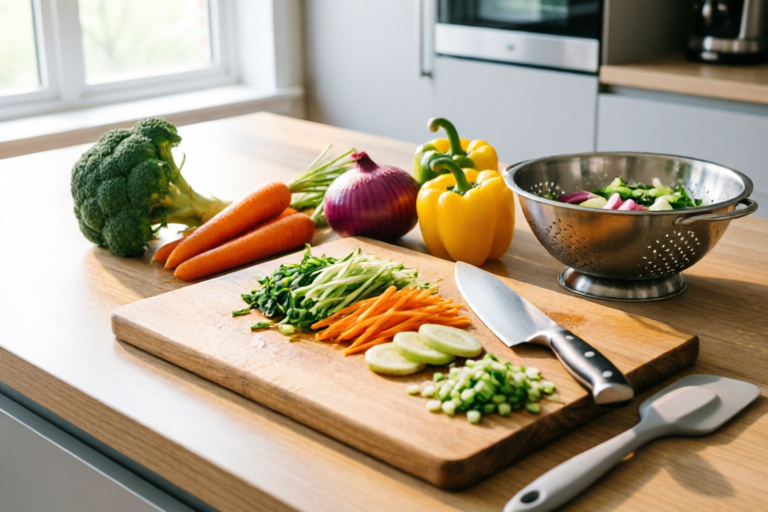
How to Quickly Chop Vegetables Without Mess
Efficient Vegetable Chopping Made Easy
Introduction
Chopping vegetables is an essential part of cooking, but it can often be a messy and time-consuming task. Whether you're preparing a quick weeknight dinner or prepping ingredients for a large meal, having a streamlined method can save you both time and frustration. In this guide, we'll explore how to quickly chop vegetables without creating a mess, ensuring your kitchen stays tidy and your meals get prepared efficiently.
Common challenges faced while chopping vegetables include dealing with splatters, spills, and the overall time it takes to prep everything. By using the right tools, techniques, and organization, you can minimize these issues and enjoy a cleaner, more efficient cooking experience.
Essential Tools for Quick Chopping
List of Must-Have Kitchen Tools
- Sharp Knives: A sharp chef's knife is indispensable for slicing through vegetables cleanly and efficiently. Dull knives require more force and can lead to uneven cuts and increased mess.
- Cutting Boards: Use separate cutting boards for raw meat and vegetables to avoid cross-contamination. Choose boards made from durable materials like bamboo or plastic for easy cleaning.
- Mandoline Slicer: This tool allows for precise, uniform slices of vegetables, which can be particularly useful for salads or garnishes.
- Vegetable Peeler: For removing tough skins or unwanted parts of vegetables like carrots or potatoes.
- Food Processor: Ideal for larger quantities or when you need finely chopped or grated vegetables.
Why These Tools Are Crucial
Using the right tools not only speeds up the chopping process but also helps in maintaining hygiene and reducing mess. Sharp knives make cleaner cuts, reducing the likelihood of splattering juices, while mandolines and food processors provide precision and consistency in your cuts.
Proper Preparation Techniques
Tips on Washing and Drying Vegetables Before Chopping
Before you start chopping, ensure your vegetables are thoroughly washed. Rinse them under cold water to remove any dirt, pesticides, or debris. Pat them dry with a clean towel or use a salad spinner to avoid excess moisture that could make chopping slippery and messy.
Importance of Organizing Your Workspace
Organizing your workspace is key to efficient chopping. Lay out all necessary tools and ingredients within easy reach. Keep a trash bin nearby for peels and scraps, and have a bowl ready to collect chopped vegetables. This setup will help you stay focused and reduce unnecessary movements.
Effective Cutting Methods
Demonstration of Different Cutting Techniques for Various Vegetables
- Carrots: Slice off the ends, peel if desired, and cut into sticks or rounds depending on your recipe needs. For julienne strips, use a mandoline or a sharp knife.
- Onions: Halve the onion, remove the root end, and slice thinly. To avoid tears, chill the onion in the fridge for about 10 minutes before chopping.
- Bell Peppers: Remove the stem, seeds, and ribs. Cut the pepper into quarters, then slice or dice as needed.
- Zucchini: Trim the ends and cut lengthwise into halves or quarters. Slice thinly for stir-fries or grate for breads and cakes.
How to Use the Right Knife Grip and Posture to Prevent Accidents and Reduce Mess
Hold the knife with a firm grip, placing your thumb and index finger on either side of the blade near the handle. Keep your other fingers wrapped around the handle. Maintain a steady posture by standing upright and positioning your feet shoulder-width apart. This ensures stability and control, preventing accidental slips that can cause messes.
Tips to Minimize Cleanup
Strategies for Keeping the Kitchen Clean During and After Chopping
- Use a Mat: Place a silicone or non-slip mat under your cutting board to catch any stray pieces and prevent sliding.
- Contain Waste: Collect peels, seeds, and other waste in a designated container rather than scattering them across your counter.
- Wipe As You Go: Wipe down your cutting board and utensils periodically to avoid a buildup of food particles.
Suggestions for Easy Cleanup Methods That Save Time and Effort
After chopping, rinse your cutting board and knives immediately to prevent stubborn stains. Soak your knives in warm soapy water for easier cleaning. For tougher residues, use a mixture of baking soda and water to scrub your cutting board. Regular maintenance, such as sanitizing your tools and surfaces, will keep your kitchen hygienic and ready for the next meal.
Conclusion
In conclusion, mastering the art of quick and mess-free vegetable chopping involves using the right tools, proper preparation, and effective cutting techniques. By following the tips outlined in this guide, you can streamline your kitchen workflow and enjoy a more enjoyable cooking experience. Practice these techniques regularly to become more efficient and confident in the kitchen.
Comments

Efficient chopping has saved me so much time. Perfect for busy weeknights!

Keeping my kitchen clean during chopping is a game changer. Less to clean up later!
The right knife grip made all the difference. No more clumsy cuts for me!

Tried this, loved it! My veggies are chopped in half the time.

Great tips! I usually end up with a huge mess. Any advice for chopping onions without crying?

I tried this method with carrots and zucchini - so much less mess!
This really helped me cut down on prep time! My kitchen's cleaner too now. Thanks!