# How to make the perfect creamy pasta dish in twenty minutes
## Introduction: The 20-Minute Comfort Challenge
In the modern culinary landscape, few things are as universally loved yet seemingly impossible to prepare quickly as a rich, creamy pasta dish. We have all been there: coming home after a long day, exhausted and craving the warmth of a comforting meal, but facing the clock ticking away before dinner is ready. The myth persists that creamy sauces require hours of simmering, constant stirring, and a mountain of patience. This article shatters that illusion entirely.
Welcome to your definitive guide on how to create a restaurant-quality creamy pasta dish in under twenty minutes. This isn't just about speed; it is about efficiency without compromise. The goal here is to prove that you do not have to sacrifice richness or flavor complexity simply because you are short on time. By understanding the underlying chemistry of ingredients and utilizing efficient kitchen workflows, you can master the balance between speed and taste.
Why does this method work for busy schedules? The secret lies in strategic preparation and leveraging the properties of starchy pasta water. Traditional recipes often rely on heavy reduction times, but we will demonstrate how to accelerate flavor extraction through proper emulsification. Whether you are a college student, a working parent, or a culinary novice, this challenge invites you to reclaim your evenings. You will learn how to manage your time effectively so that by the time the timer goes off, you are serving a velvety, cohesive dish that feels indulgent, not rushed.
This guide is designed to demystify the process. We will walk through every stage, from ingredient selection to the final toss, ensuring that you never encounter a broken sauce or overcooked noodles again. The following sections will provide a deep dive into the mechanics of making this dish perfect, turning twenty minutes into your golden hour in the kitchen.
## Ingredient Selection and Prep Work
The foundation of a delicious pasta dish rests almost entirely on the quality and selection of your ingredients. You do not need obscure spices or expensive cuts of meat to achieve excellence, but you do need smart choices. For this twenty-minute challenge, your pantry staples are your most valuable allies. Let us dissect exactly what you need to grab before you even turn on the stove.
### Essential Pantry Staples
**Short Pasta Shapes:** First and foremost, choose a short shape pasta. Shapes like penne rigate, fusilli, radiatori, or macaroni are superior to long strands like spaghetti for creamy sauces. Why? Because the curves and crevices trap the sauce, ensuring every bite is coated evenly. Furthermore, short pasta cooks slightly faster and allows for better surface area interaction with the sauce. Look for bronze-die pasta whenever possible; the rougher surface holds onto emulsion better than smooth, Teflon-cut noodles.
**Dairy Components:** You will need dairy for creaminess. Heavy cream is the easiest option for beginners due to its high fat content which prevents splitting. However, for a lighter touch, whole milk combined with a thickening agent works well. High-quality butter is non-negotiable; salted or unsalted, it provides the necessary fat for mouthfeel. Parmesan cheese is crucial. Do not settle for grated powders in cans. Find a block of Parmigiano-Reggiano and grate it fresh. The oils in freshly grated cheese melt differently and provide a savory depth that pre-packaged alternatives simply cannot replicate.
**Aromatics and Flavor Builders:** Garlic is your primary aromatic. Fresh cloves are essential; avoid jarred minced garlic as the texture and oxidation dull the flavor. Onions or shallots are optional but recommended for a sweeter base. Fresh herbs like basil or parsley add a pop of color and freshness at the end, but dry oregano or chili flakes can stand in for immediate heat.
### The Art of Pre-Chopping for Speed
Time management begins before the pot boils. This is the concept of "Mise en Place." If you wait until the water is boiling to chop your garlic, your pasta will overcook waiting for you. Take five minutes to prep everything. Finely mince your garlic to ensure it distributes evenly throughout the sauce without burning. Slice your onions thinly to reduce cooking time. If using spinach or broccoli, wash and tear them now so they are ready to wilt instantly when tossed.
Measuring your liquids early is also a time-saver. Pour your cream and stock into small bowls rather than measuring while cooking. Shred your cheese immediately. This workflow ensures that when the heat comes on, you are a conductor orchestrating an orchestra, not scrambling for knives and spoons. The difference between a chaotic fifteen-minute scramble and a smooth twenty-minute meal is entirely in this preparatory phase.
## Efficient Pasta Cooking Technique
Getting the pasta right is the first half of the battle. Boiling pasta seems simple, but doing it fast enough for a 20-minute timeline requires precision. Most people rush this step or boil indefinitely, resulting in mushy textures.
### Managing Boiling Water Salt Levels
Water acts as a conduit for heat and seasoning. Start with a large pot filled with water. If the water level is low, the pasta releases too much starch into a concentrated liquid, leading to gummy clumps. Fill the pot generously to allow the noodles to move freely.
Regarding salt: You must salt the water aggressively. Imagine tasting the water; it should taste like the sea. This is because pasta absorbs water while cooking, and if the water is bland, the pasta itself will be under-seasoned. You have about three minutes of activity once you drop the pasta in, so the salting must happen while the water comes to a rolling boil. A good rule of thumb is one tablespoon of kosher salt per gallon of water. This doesn't just season; it helps strengthen the gluten in the flour, giving the pasta structural integrity against overcooking.
### Achieving Perfect Al Dente Within Time Limits
Al dente translates to "to the tooth." It means the center of the pasta noodle is cooked but still offers a slight resistance when bitten. Achieving this in twenty minutes is achievable but requires vigilance.
Check the package instructions for cooking time, but treat them as a guideline. Often, packages suggest eight minutes, but premium bronze-cut pasta may cook faster. Test a piece of pasta one minute before the suggested time. Pull a strand out, blow on it to cool, and bite. If it has a tiny white dot in the center, it needs thirty more seconds. If it is uniform brown/tan, it is ready.
Crucially, stop the cooking process before the timer hits the mark. Pasta continues to cook via residual heat once removed from the water. Remove your pasta from the boil two minutes before it reaches perfection. You want it to finish its journey in the sauce, absorbing liquid and flavors. This "carryover cooking" prevents sogginess and integrates the pasta into the dish seamlessly.
### The Importance of Pasta Water Reserve
Before draining the pasta, you must reserve the cooking water. Never dump it all down the drain. Scoop out at least a cup of the starchy, cloudy liquid. This is your secret weapon. It is liquid gold. The starch suspended in this water is essential for thickening the sauce later. Without it, your sauce will sit atop the noodles rather than coating them. Keep this hot near the heat source until you are ready to use it.
## Emulsifying the Creamy Sauce Base
This is where magic happens. A creamy sauce is not just heavy cream poured over pasta; it is an emulsion. An emulsion is a mixture of two liquids that normally don't mix—fat (from butter and cheese) and water (from milk, stock, and pasta water). When done correctly, the result is stable, velvety, and glossy. When done incorrectly, it separates into greasy pools and curdled solids.
### The Secret to Combining Fat and Liquid
The scientific principle here is stability through emulsifiers. Starch molecules from the pasta water act as the stabilizer. As you swirl the water into the fats, the starch coats the fat droplets, preventing them from coalescing back into oil.
To start the sauce, use a skillet that is wide enough to hold the pasta comfortably. Heat a splash of olive oil or melt a knob of butter over medium heat. If using garlic, add it gently. You want the garlic to become fragrant and turn golden, not black. Burnt garlic tastes bitter and ruins the delicate profile of a cream sauce. Cook for about one minute only. Once fragrant, add your cream or milk mixture. Bring it to a gentle simmer, not a hard boil.
### Temperature Control for Stability
High heat causes separation. Dairy proteins denature too quickly under intense boiling, causing curdling. Keep the flame on medium-low once the cream is added. If the sauce bubbles too violently, reduce the heat immediately. Stir constantly with a wooden spoon or silicone spatula. Watch the texture change from loose liquid to a coating consistency. This should take about 3-5 minutes.
As the sauce thickens slightly, begin incorporating the reserved pasta water. Add it slowly, a ladleful at a time. This gradual addition allows the emulsion to form smoothly. If the sauce looks too thin, add more water. If it becomes too thick, add more. The goal is a sauce that flows slowly off the spoon but clings to the back of a fork. Taste it now. Adjust seasoning with salt and black pepper. Black pepper adds a subtle heat that contrasts beautifully with the richness of the dairy.
## Integrating Pasta and Sauce
You have prepared your components: perfectly cooked al dente pasta and a luscious, stabilized emulsion. Now comes the integration. This is the critical finishing stage where the dish comes together.
### The Critical Finishing Stage
Transfer the drained pasta directly from the pot to the skillet containing the sauce. It is vital to keep the pasta hot. Do not rinse the pasta! Rinsing removes the surface starch which helps binding. Immediately begin tossing the pasta in the sauce. Use tongs to lift and fold the noodles, ensuring every curve and spiral captures the creamy liquid.
As you toss, add splashes of that reserved pasta water while mixing. You will notice the sauce transforming. It changes from sitting on top of the noodles to wrapping around them. This is the moment of truth. If the sauce clumps, it needs more water agitation. If it slides off, it needs more emulsification. Cook together for one final minute. The pasta finishes absorbing the flavors, and the sauce reduces just enough to coat without being soupy.
### Binding the Ingredients Together
Tossing vigorously introduces air and creates the velvet texture. If using leafy greens or vegetables, add them now. They will wilt rapidly in the residual heat. Turn off the heat completely before adding the cheese. While melted cheese binds well, adding parmesan to direct high heat can make it grainy. Instead, remove the pan from the burner, stir in the grated cheese, and let the steam melt it. Then, stir in a knob of cold butter for gloss and richness (finishing with butter).
Your dish should now look unified. There should be no visible separation of oil or liquid pooling at the bottom. The entire skillet should be a monochromatic, creamy mass of flavor.
## Conclusion: Serving Suggestions and Leftovers
Congratulations. In less than twenty minutes, you have created a dish that rivals a fine dining establishment. Now, it is time to present your creation.
### Final Plating Advice and Garnish Ideas
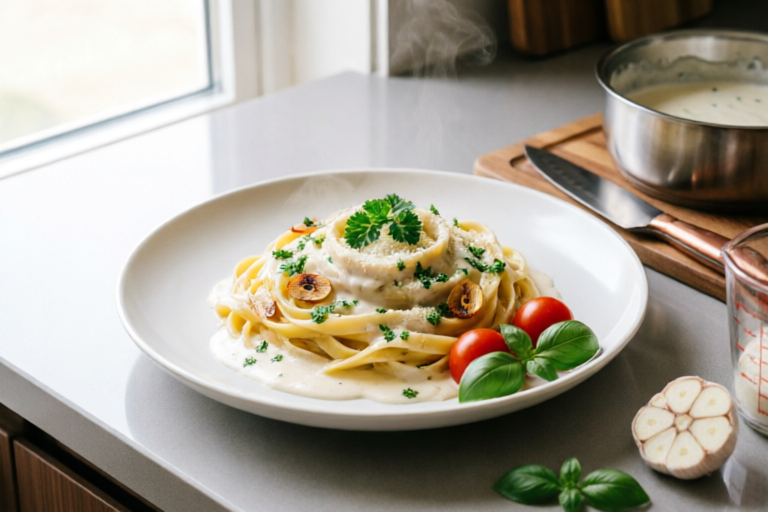
Plating is not just about aesthetics; it is about setting expectations for the eater. Serve warm plates if possible. Pile the pasta high in the center of the bowl to show off the volume of the sauce. For a pop of contrast, garnish with fresh chopped parsley or basil. If you made it spicy, red chili flakes add visual appeal. A final crack of black pepper over the top enhances the aroma.
Consider pairing this creamy pasta with a crisp green salad or roasted vegetables to cut through the richness. A glass of white wine pairs beautifully with the acidity needed to balance the dairy.
### Storage Tips for Remaining Sauce or Pasta
Leftovers can be tricky with creamy sauces. Refrigeration tends to thicken the sauce as the fat solidifies. If you have leftovers, store them in an airtight container for up to three days. Reheating requires care. Microwave heating often results in uneven temperatures and further thickening. Instead, reheat on the stovetop over low heat. Add a splash of milk or pasta water while warming to restore the original silky texture. Avoid reheating more than once, as dairy can spoil or separate easily.
### Wrap Up
Making a perfect creamy pasta dish in twenty minutes is not a fantasy; it is a skill. By selecting the right ingredients, managing your prep time, mastering the emulsion, and executing a quick integration, you can transform a busy night into a feast. The satisfaction of eating a meal you crafted quickly and successfully is unparalleled. Remember, the key is patience in the process even when time is tight. Trust the science of the starch, respect the heat, and enjoy the rewards of your culinary effort.
Whether for a solo meal or a family dinner, this method provides a reliable framework for success. Next time you face the clock, remember: you have everything you need to make greatness, starting right now.